Tuesday, March 20, 2012

NE Iowa Trout, Environment, & Angler Access Questions Answered

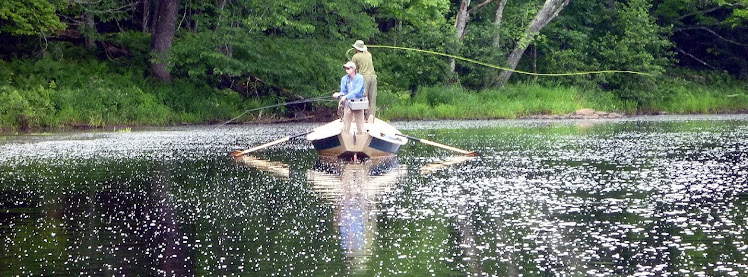
   On a recent 3-day fly fishing trip to NE Iowa, I spent a day fishing with Theresa Shay, a friend and an Iowa DNR Fishery Technician.  We headed to Patterson Creek, a 40 minute drive NE of Decorah.  It’s a stream stocked with catchable rainbow trout.  It had previously been stocked with brown trout fingerlings but that ceased after discovery of naturally-reproducing browns.  The stream meanders through private property and has both no trespassing and public fishing sections.   
   On that Saturday morning, two other anglers had completed their fishing, carrying a catch of browns back to their truck.  The men had been fishing on the private, no public fishing section without landowner permission.  In a friendly, non-threatening manner which seems to be the norm in NE Iowa, Theresa educated the anglers about the methods used to discern when it is legal to fish on sections of Iowa streams.
   This was a prime example of some of the recurring concerns/questions I have had when fly fishing in NE Iowa.  Knowing others have had similar questions, I’d already made a scheduled stop at the Decorah Fish Rearing Station.  Bill Kalishek, IA DNR Fisheries Biologist, had been kind enough to sit for an interview. 
   Both Bill and Theresa are based at the Decorah Fish Rearing Station.  In general, their primary responsibilities include:  fish sampling of lakes & cold and warm water streams in an 8-county area, improving the waters’ fish populations, and public education.  They also provide the final recommendation of what fish are stocked in the streams. 

   Stocked or Wild Fish
   The Iowa Trout Fishing Guide, commonly known as the Trout Map, indicates streams that are stocked with catchable rainbow and/or brook trout, fingerling brown trout, or support enough natural reproduction that stocking with brown trout is no longer deemed necessary.  Stocking of fingerling brook or rainbow trout occurs on just a few streams.  When asked if one could tell the difference between a stocked trout and naturally reproduced trout, Bill indicated that in most cases one can’t unless you go by species.  Other than Coldwater and Bigalk streams, which have had a very limited amount of natural reproduction of rainbow trout, if you land a rainbow it is generally a stocked fish.  Both rainbow and brook trout are stocked at catchable sizes typically 10-12” long.  According to Theresa, rainbows emanate from the Shasta strain, originally from N. California, and brook trout stocked as ‘catchables’ are of the St. Croix strain from St. Croix, WI.  With the only exception being the once per year release of approximately 50 brood brown trout in Iowa streams, any stocking of browns would be a 2.5-3.5” fingerling length, not a catchable size.   Bill reported that all fingerlings come from French Creek brown trout and that one could not tell the difference between these stream-reared and hatchery-reared fingerlings.              
     But for those like my friend Jackfish Kate who would prefer to eat a stocked fish and return a naturally reproduced fish to the stream, and for folks like me who are just plain curious, there are a few other ways to estimate if the fish is recently stocked or if it has survived in the stream for 6 months or more. Unluckily, under the first condition you have to kill the fish. 
   According to Bill, there is a difference between the taste of these fish and the color of their flesh.  For example, the flesh of a recently stocked bow, which has been eating pellet food, is white. Bill states the fish has a mild taste, likening it to orange roughy.  After a year in the stream, the bow’s flesh becomes pink and it tastes more like salmon.
   One could land a more drably-colored rainbow, surmise it was newly stocked and, perhaps, be correct. Bill admits that the bows at the hatchery are usually more ‘washed-out’ than a fish living in the stream for at least 6-10 months.  However, the fish’s need to camouflage itself, its diet and general health, and the water clarity, also determine how brightly-colored it is.  For example, a bow landed in muddy water will be more washed-out than a bow living in clear water.  Bill even reports that a drably-colored bow sampled from muddy water and placed in a tub of clear water with the sun penetrating it, will appear more brightly-colored by the time it is removed from the tub to be measured.  Bill further reports that from his own fishing experience, he’s noted that when he’s fished in March for October-stocked fish, the Rainbows then display brighter cheek patches, more distinct spots on the sides and back, and their pink stripes are much more distinct.  Aside from diet, Bill says, “The fish’s desire to camouflage is what drives the whole thing.”  Of course the spring rainbow may be dressed in spawning colors, but after about 6 months in a stream environment, the fish takes on the characteristics –and colors- of a wild fish. 
   And as far as brook trout go, there is no discernible difference between a wild or hatchery-reared brookie.  Iowa’s only native trout leave the hatchery with vivid coloration.  They are raised in ponds on hatchery property while rainbows are raised in raceways.  According to Theresa, “The brook trout we stock as fingerlings are from South Pine.  We have also been experimenting with a strain from Ash Creek, WI, on streams where previous efforts at restoration with the South Pine strain failed.”  

   ‘Trophy’ Fish
   While clarifying most but not all of the stocked brown trout are fingerlings,   Bill detailed that prior to the browns’ peak of spawn in November, DNR personnel remove 150 fish from French Creek, squeeze the eggs and milt from the fish and, ultimately, produce first-generation wild fish that are then stocked as fingerlings in other streams.  The adults that had been removed from French Creek are typically returned to this creek after the egg/milt harvest has occurred.  However, about 50 fish are kept for 2-3 years as an egg source.  Under hatchery conditions the fish get larger than they typically would in the stream and they produce many more eggs.  However, egg survival drops as the fish age.  These fish are then put back into streams –but not French Creek, keeping it a completely wild fishery.  Bill states, “Pretty much any stream that we have that gets stocked with the catchable-sized rainbows, could get one of those big brood (brown trout) fish…maybe one fish per stream, but maybe some streams won’t get one.”  Throughout the year, all 3 species of brood trout are released in streams stocked with catchable fish.  Brood rainbows are released in the greatest numbers.    
   The Fisheries Biologist referred to stream-reared fish as having been either naturally reproduced in the stream or having been stocked as fingerlings.  He reported that it’s pretty common during fish sampling to see 16-18” browns.  While there naturally won’t be a great number of large fish in a stream, Bill said, “I think most of our streams have the chance of having a 20”+ brown trout in it.”

   Natural Reproduction
   More and more Iowa trout streams are exhibiting natural reproduction.  Improvements made to in-stream habitat and the vast amounts of work completed and money spent improving watersheds, are due to cooperation between federal and state land managers, landowners, and non-profit organizations, according to Theresa.  With regard to the watersheds, she reported, “If we can treat what runs into the streams before it gets to the streams, many times the streams can heal themselves.”
   Theresa also credits some of the reproductive success to a change in the stocking program.  She reported that stocking of the catchable-sized ‘domestic’ strain of brown trout was ceased in 2004 because stream sampling of the fingerling strain of French Creek brown trout indicated good survival.  She said, “This trend continues now, and we recently have been getting excellent reports of nice size brown trout on sections of streams that hadn’t had any, and really nothing in the watershed had changed but the strain of fish we stocked.”    
 
   Stream & Fishing Conditions
   There are about 105 cold water streams, located in 10 counties, in NE Iowa.  These streams generally provide a supply of 42-58*F spring water, making them cold enough to support trout.  During the hottest part of the summer season, the water temperature of these streams remains lower than 75* which bolsters trout survival.  Furthermore, the ‘karst topography’ of the area creates the (alkaline) calcium carbonate-containing water, buffering the water, protecting the fish, and supporting a larger and denser insect population. 
      Many anglers report it is easier to fish the streams in early spring and late fall when vegetation isn’t actively growing or as dense.  Pasture streams may provide easiest foot access in warmer weather.  Fishing smaller streams such as S. Pine or the upper reaches of French Creek on a summer day may require above-average stream tactics and casting skills.  Although the cold of winter may not always be pleasurable, there isn’t much competition from other anglers, and there are no stinging nettles, ticks or mosquitoes with which to contend. However, snowfall does present other challenges to the angler.  Many of the stream parking lots are not plowed and one must then park on the gravel roadside. Poor phone reception could be problematic should a vehicle become stuck and assistance required.  However, for those who find winter fishing worth the risk, Bill reported that the area of S. Bear and the streams in the Yellow River State Forest have limited plowing.  While one would not wisely suggest fishing during deer hunting season, the lots at Bloody Run and S. Bear are sometimes plowed for the hunters.  I always stow a blaze orange hat in the suv during the winter season.
   When considering a trip to NE IA following heavy rain or high snowmelt, Bill reports there are some streams that stay clearer longer.  Streams with better watersheds such as N. and S. Bear, French and Waterloo, and streams with a really small watershed such as S. Pine, don’t get muddy as quickly as other streams.  Furthermore, Bill reports that the upper end of any stream or a small tributary coming into a stream may offer better fishing during this timeframe.
   Having noted an increasing number of beaver dams on the Iowa trout streams last year, I questioned Bill about the effects of the dams on streams.  He reported that over the short-term, the deeper water produced by a dam provides good overhead cover and habitat for fish.  However, due to a lot of agriculture in the watershed with a lot of mud coming into the stream during high flows, the dam slows the water down, silt builds up, the pond becomes shallow and the water warms, reducing both trout & invertebrate habitats.  Last year, two active beaver dams were present on Coldwater Creek, in a stream section with naturally reproducing brown trout. One dam presented with at least a 5’ difference between the stream bed and the pond’s water surface.  Bill reported that a trapper was hired to remove the beavers and that the next flood would, hopefully, remove the dams.
   When questioned if the DNR should be notified about stream conditions, Bill immediately responded that one should call the 24-hr hotline, 515-281-8694, to report fish kills or potential environmental spills.

   What the Angler Can Do to Protect Streams & Maintain Angler Access
   When Bill was questioned about what visitors to NE Iowa can do to help maintain stream health, he summarized that, “Picking up junk as you go up along the stream; thanking landowners when you see them, or getting active with groups like TU & HFFA, that do workdays and volunteer their time to do on-the-stream projects…” are ways to contribute to clean water and healthy streams.  Furthermore, he was very emphatic when he said that one should be courteous, especially on private land where there are agreements to fish.  He said, “One of the things fishermen can do is… thanking private landowners when you run into them on the stream.  Thanking them for allowing the public to fish there really goes a long way.  When I go out & meet with folks like that, they remember that, they definitely do.” 
   One does not need to be on the water, however, to make a difference.  Anglers can make a large impact by being an advocate for conservation and knowing what is going in the political process with reference to stream health.  The Iowa Environmental Council sends out newsletters to alert readers to what is happening in the legislative process. The Sierra Club operates in a similar manner. 

   Is the Public Allowed to Fish and Camp Here?
   Anglers may fish in waters found on public land such as Iowa State Forests and Parks, and Wildlife Management Areas.  The IA DNR also buys private land from willing landowners, increasing fishing opportunities on publicly-owned land.
   However, in the Driftless region, many of the trout streams flow through private land.  Furthermore, in Iowa, the landowner also owns the streambed.  On private property, two systems allow the opportunity for public fishing.  The ‘handshake agreement’ is simply a verbal agreement between the landowner and the state, allowing public fishing.  According to Bill, some of these places have been open to public fishing for 60-70 years.  The landowner can terminate public access at any time or, if the property is sold, the new owners may not continue to allow fishing access.  The latter, according to Bill, is “...what we’re really seeing happening.  So, now we’ve started buying permanent easements.”   
     The second system is the Angler Conservation Easement that allows public fishing, fish stocking by the DNR, and habitat improvement on the stream.  The easement consists of a corridor of 75’ on both sides of the centerline of the stream; therefore, the corridor moves as the stream changes direction.  This allows continual access to the stream.      
   On private property where a verbal agreement is in place, one will frequently see white signs which read, ‘Private Property. Public Fishing Only’.  Stiles, allowing one to easily cross a fence, may also be present.  However, the owner ultimately decides if these indicators to public fishing are allowed on the property.  On private property where an easement is present, DNR staff will be posting new, grey signs reading, ‘Open for Public Fishing. Stream Easement Area’.  It’s important to note that signs can be damaged, or even disappear after flooding occurs.  Furthermore, while public fishing may be allowed on one section of stream, it may not be allowed along the complete length of the stream.  If in doubt, stay out or ask the landowner.  There are plenty of fishing opportunities in the region.    
   As written above, agreements/easements on private property allow public fishing and nothing more.  No camping is allowed.  On public land, camping is allowed.  In IA State Forests, camping is available in non-modern, designated campgrounds.  In IA State Parks, with use of a reservation system camping is available in designated areas.  In Wildlife Management Areas, camping is available in designated areas or the camper may legally hike elsewhere and set-up camp in a non-designated area, unless otherwise posted.  Regardless, one is expected to ‘leave no trace’.  Camping is allowed up to 14 consecutive days in all 3 publicly-designated land-types.

   DNR Trout Map, Website and Other Resources
   I consider NE Iowa a hidden treasure.  It amazes me that this beautiful, green ‘Midwestern Montana’ isn’t overrun with tourists.  However, during my introductory drives to NE Iowa, I also considered the region to be a hidden treasure simply because it also took me half a day on gravel, winding roads to find the elusive parking lot for a trout stream.  Since those early days, I’ve acquired 2 GPS units, two books about Iowa trout streams, an updated Trout Map, and a little wisdom.  I’m also considering (map) reading glasses. 
   I seriously recommend that anyone angling for NE Iowa trout have at least one copy of the Iowa Trout Fishing Guide (Trout Map).  Really.  The map’s most recently updated printing was in May, 2011.  It is updated every 2-3 years, so be aware that some stocking or stream changes will occur which won’t be available on the current map in any given year.  The map’s stream table now includes GPS coordinates for each stream’s lowest parking lot or site.  Otherwise, this table continues to indicate which species of wild or stocked trout are present on each stream.  If a stream is designated as not stocked (NS), it is not stocked with catchable trout of that species but may still be stocked with fingerlings.  The table also indicates this.  Unannounced stockings, and if a stream is too warm to be stocked in July/Aug, are indicated.  Camping availability, if a stream has an easement, special fishing regulations, and if a stream has ‘easy access available’ or ‘universal access’ is also noted in the table.  There is a separate table providing information about put-and-grow streams.  The map itself now displays where public lands are located.  Primary highways are titled but other roads are not.  Catchable trout waters, special trout fisheries, and their parking locations are clearly marked.  The map provides more information not listed here.  Trout Maps can be obtained at NE Iowa DNR offices and NE Iowa businesses selling fishing licenses.  Otherwise, a map will be sent if you contact the NE Iowa hatchery or rearing stations.  I would still recommend use of either the Iowa Gazzetteer, local area maps, a GPS, or one of the books about fishing in NE Iowa, as a primary means of finding a fishing location.  The books, The Complete Guide To Iowa Trout Streams, by Jene Hughes, and Flyfisher’s Guide to Wisconsin & Iowa, by John Motoviloff, are both helpful in providing maps of a specific stream with nearby roads, along with recommended driving directions.  There are other books available that may be equally helpful.  
   Bill explained the stream access terms printed on the map.  ‘Easy access’ means that the area is fairly flat and possibly mowed, or it might be pastureland.  One can park the car and easily walk to the stream without concern about steep hillsides or a lot of vegetation on the bank.  It may be public or private land.  ‘Universal access’ is another term for handicapped access.  The trail, located right off of the parking lot, is hard surface, such as packed gravel or cement, and it leads right to the stream.  Another trail will parallel the stream for some length.  This type of access is always located on public land.  Bill states that the two streams that offer the greatest access are Richmond Springs, located in Backbone State Park, and Trout Run, located in the Decorah area and also running through the Decorah Fish Rearing Station.  Richmond Springs offers a 500-600’ long trail.  Trout Run has multiple access areas due to the presence of a recreational trail.  The fish rearing property has 3 streamside areas with benches, all accessible from the parking lot, & with paved sidewalks.  Bill said that he realized these easier access areas are being built not just for people in wheelchairs, but also, for example, for people in their 40’s who blew out their knees playing basketball, and for parents with kids.
   The DNR website has been redesigned and an added feature includes the expanded general fishing and trout fishing sections found under the Fishing tab.  The trout stream link found on the website will take one to a table listing the streams, their locations and their lengths.  Another link on that page provides more stream details and a printable map of the stream.  Under the Environment tab, the “Mapping & GIS” page can be selected.  An excellent link is the “basic map” found below the Web Map Applications heading.  It allows for different mapping options, zoom features, and the appearance of GPS coordinates when the cursor is placed over a desired location.
   Fishing regulations are available on the website and, to a limited extent, on the trout map.  Signs are also typically posted along special regulation sections of streams. Iowa fish are generally safe to eat and the website provides additional details.  Of course, a fishing license and a trout stamp are required to fish for trout and can also be purchased through the website. 
   The beauty of NE Iowa makes it easy to enjoy fishing in the region.  Other advantages to Iowa trout fishing are both that the season is open and much of the streams have free-flowing water every day of the year!   The rest is up to you.  (3/20/12)

Links:
The Iowa Environmental Council:  http://www.iaenvironment.org/
Trout Unlimited (TU) Chapters in Iowa:
   Des Moines:  http://www.tu-northbear.org/
Hawkeye Fly Fishing Association (HFFA):  http://www.hawkeyeflyfishing.com/
DNR website links:

Phone numbers:
Manchester Trout Hatchery:  563-927-3276
Decorah Fish Rearing Station:  563-382-8324
Big Spring Fish Rearing Station:  563-245-2446
24-hr environmental spill hotline:  515-281-8694
Turn In Poachers (TIP) hotline:  800-532-2020

Friday, February 24, 2012

Regional Expo Updates and Blog Plans

   Last weekend’s Hawkeye Fly Fishing Association’s Annual Fly Fishing Meeting, i.e. an expo with a meeting, was a great success.  It was held in Iowa City, IA.  The speakers, including Brian O'Keefe, were well-received.  The guest fly tiers were impressive tiers and educators.  I spent time with Scott Nordby, http://www.flychucker.blogspot.com/, and Pike fly tier James Durbin, http://www.cowboyflyfishing.blogspot.com/, leaving with a foam beatle and a Pike fly.  Of course, I came away with more fly tying supplies and… 2 skunk tails!!! I now have 3 tails but my new ones don’t smell like the one which is still sitting in my garage.  I no longer have to debate if I should dare to take that scented tail into my home.

   On that note, expect to see blog entries in the near future for a couple fly tying recipes using skunk tail.  I spent at least 30 minutes sitting on the floor in the vendor’s room examining tail.  It can be soft, supple or coarse, it is frequently luminescent, the white can be white or ‘pee-colored’ and single strands are a solid color or alternate between white and black.  

   I’m gearing up for the annual Great Waters Fly Fishing Expo, which will be held in Blaine, MN, March 23-25th.  The main focus will be helping out at my friends’ booth, promoting fly fishing and Arrowhead Fly Angler guide service, http://www.arrowheadflyangler.com/, serving northern MN and WI).   Jackfish Kate will also attend and may help at the booth.  For more information about the show, visit this link and look for a discount coupon, too:  http://www.greatwatersflyfishingexpo.com/.

   The local chapter of HFFA is also in the planning stages of hosting next year’s  ‘Annual Meeting’- AKA expo-  in Bettendorf, IA.  Rumor has it that there will be additional speakers about warm water fishing and local fly fishing opportunities, but many still hope for a fair amount of discourse about Trout in the Driftless Areas of IA, MN, and WI, or in other areas of the country.  Attend meetings 1st/3rd Sundays of the month at Riverdale fire station and share your opinion on this club event. 
  
   I’ve added another non-profit organization to the ‘Casting It Forward’ page.  It’s called ‘Reel Recovery’ and members/volunteers conduct free fly fishing retreats for men recovering from cancer.  This year I plan to add more conservation-minded posts to this page on the blog.  I am looking forward to posting first-hand accounts of volunteer conservation & fly fishing efforts while promoting organizations & individuals who work anywhere for clean water, happy fish, and happy/healthy anglers.  Help me to fill this page! 

   In the near and distant future (this year), I hope to post informational articles about Smallie and Steelhead fishing after conducting interviews and doing my own research.  And, I just thought to myself:  why not a Carp story?  I’d love a reason to again contact Barry Reynolds; a gentleman very willing to share his time and knowledge of fly angling.  **The post to drive me crazy:  adhesives.  Everything from head cement to UV-cured adhesives will be covered (gulp!) with recommendations for their usage and the creation of a chart (double gulp!!) to provide a quick visual on properties (such as drying time) and their general uses.  **I am looking forward to speaking with reps from the IA DNR.  Expect a post about the Trout stocking program, including lesser-known information about stocked Trout and their wild counterparts, some added insight to the new trout map, and about the Driftess Area streams.  **I'm still searching for fishy recipes.  Send me an original!  Of course,  discourse on the magnificent Musky & additions to the WI-MN Diaries will continue.  My goal this year is to self-edit.  Entertainment stories must be under 800-1000 words.  

**I do plan on posting more fly tying recipes.  I'm currently working on the prototype of the ‘Double Buck’.  It is my spin-off of a fabulous large-profile articulated fly I saw last year when fishing with friends from Musky Country Outfitters, http://www.muskycountryoutfitters.com/.  And yes, I saw that fly meet with a Musky!  Sadly it wasn’t when I fished the fly.  I’ve added a collar on my fly to push water.  I also plan to make a couple more changes to truly call this challenging tie 'my own'.  I may post more info on the success or demise of the fly, but no recipe will be posted until (if) the fly is successfully fished.  **I will soon post the PeaBody Nymph.  And, can anyone say ‘Bass Flies’?  I’ve got a real itch to get into some Smallies this year and who doesn’t like a good Bass tie recipe?!

   So, as usual, I have grand plans for posts.  IF I win the ‘Mega Millions’ next week, I will post fairly frequently after my month-long fly fishing vacation.  If I am required to continue working full-time, I will travel and interview folks, and fish & tie flies when I can.  Articles will be posted over the course of the year.  Wish me luck!

Friday, February 17, 2012

Humility and the Fly

Humility is fly fishing’s best character-building lesson.  It is not a single experience which then becomes hosted by a distant memory, and soon forgotten.  Humility is a perfect loop, formed again and again, with a fly rod. 

Hope, confidence, ego, over-confidence spring up and then are stripped away by a few snags, a small wily fish, or a knot, poorly tied.  Humility appears; the great balancer.  It is the fertilizer we wade through that allows us to grow & casts us again and again, back to the fly rod with fresh humble eyes.
 
My time with the long rod has been short but the passion and the lesson have been long.  I yearn for the big fish, strong artistic casts, & the sharing of my yet-developed wisdom.  But none of these should be felt so deeply or appreciated so strongly without my fly fishing partner, Humility, returning always to my side. 
  2/15/12

Monday, February 13, 2012

Strike Indicator: Real Deal or Fly Fishing Puffery?

   Child sits on dock holding fishing rod, watching the red/white bobber & hoping for a fish to take the worm.  30+ years later, the woman wades in a stream, mending the strike indicator around a branch & maintaining a drag-free drift on a nymph rig, setting up for a take.  Goals are the same:  have fun & catch fish.
   Heck yes, the strike indicator is a bobber!  However, it can be more than that.  I’ve never read a book or sat with friends for hours while watching my strike indicator.  Both the bobber and the indy can set the depth of the hook and indicate when a strike occurs, which is similar in concept to how a screwdriver or a drill can drive a screw into wood. In particular situations, either tool can perform the same task.
   The plastic, foam, cork, putty, yarn, or sometimes, elk hair object, with the edgy name, ‘strike indicator’, is a multi-tool.  (The bobber may also serve other purposes, but that is a topic for another writer to explore)  This article will explore how the indy can be used in ways other than as a classic bobber, and when used similarly to a bobber, how other considerations of its use still differentiate it from conventional angling.

But when is an indicator a ‘multi-tool’ not strictly a bobber? 
   How about when the indicator is a dry fly or a hopper with a dropper attached?  How many conventional anglers hook a fish with a bobber? 
  The indicator can also be used in multi-current situations to set up the fly.  When casting directly downstream through riffles and drifting into a deeper pool, I have intermittently used an indicator.  As I strip out line to maintain a drag-free drift, first, it is easy to produce enough slack to not feel a strike and second, the disturbance to the line in the riffles can lessen the ability to sense a strike. Adding an indicator creates a waypoint where less slack is present on the side closest to the nymph and where a strike can be seen, especially during the nymph-led fishy transition into slower, deeper water. 
   A respondent to my query on theflyfishingforum.com provided another example:  the angler uses the indy as an anchor point in a slack eddy, causing the fly that has landed in adjacent fast water to pivot around this section of eddy, hit the eddy line and then flow into slow current water.  This strategy keeps the heavier fly from landing on the smooth water while still directing the fly into the current changes and to the slow flow water after the pivot-point, which tend to be popular fish hang-outs.
   Furthermore, this same angler reported that he will purposely overweight his indicator, dampening “the rigid depth controlling effect of the indy.” 
   The ‘soft take’ of a trout might be felt too late for the angler to effectively set the hook.  At times, having a visual reference to the fly can be invaluable.  Once it leaves the hand, a tiny dry fly often becomes invisible on the water, and nymphs and wet flies can be become difficult to see in a variety of water conditions.  Indicators can then be used as a simple aid to allow the angler to make better visual contact with the fly or, at least, to approximate its location in the current.  The indy here may be a commercial design, or perhaps the angler simply adds fluorescent paint to knots on the leader.  This technique could also be a teaching tool utilized to aid one with reading current.
   A guide friend of mine dislikes the term ‘strike’ indicator, believing that this gives one the mistaken belief that its primary function is to indicate a strike.  Regarding indicators, he wrote, “The main purpose is to telegraph to the fly angler how your nymphs are behaving underwater.  Using an indicator gives the angler a better visual of what is happening below the surface.”  He sure wasn’t describing a bobber.

Can this 'multi-tool' make one a better fly angler?
   Well, the simple multi-tool can set fly depth, indicate a strike, be a visual indicator of fly location, aid with fly placement in multi-current situations, & telegraph what the nymph is doing on the water bottom.  However, another valuable attribute is that the little gizmo is also a great teaching tool.  Next time you chase the fish from a hole, use the indicator and keep fishing the hole.  Without those fishy distractions, you will have a great visual with which to learn about water current, water depth & what your nymph is trying to tell you.   
   Indirectly, use of an indicator and a little patience will improve general fly fishing skills.  When one reluctantly adds an indicator to a leader already burdened with a weighted point fly, a dropper, and split shot, either one’s fly casting or knot de-tangling skills will improve (& probably both).  In streams and small rivers, presentation of both the indicator and the fly without disturbing the quarry is the new rule.  Producing a drag-free drift on a windy day can be more challenging.  Finally, when you learn what the indy is indicating and how to respond, life will be filled with more fish and fewer snags.
   Fly fishing offers endless opportunities to have fun, to learn, & be creative in the outdoors.  Improving my abilities to use and read a strike indicator have increased my general skills as a fly angler, regardless of whether I elected to attach an indicator to my leader on any given day.  The indy is simply a multi-tool which allows the angler to be successful (or not!) depending on when and how it is used.  Others may be just as successful foregoing the strike indicator while utilizing similar techniques…  As fly anglers, we have many tools at our disposal.  However, our enthusiasm & the application of our knowledge and skill, peppered with a little luck, ultimately determine our successes.

(In a month or two, this story will be moved to the 'Featured Article' section, but I will still make reference to it here so that it may remain easily found.  Thanks, ~Twitch)

Saturday, January 21, 2012

the Guelk Nymph

   A new recipe has been posted on the Fly Tying page.  It is the Guelk Nymph, which is an easy tie and can be fished either as a nymph or as a streamer.  I have fished it predominantly on NE IA streams but have also found success with this fly on WI streams.  The trout really dig it!

Tuesday, January 17, 2012

Fiddling with Flies & Java at the Coffee Shop

  The first 2012 drink, fiddle, and tie at Java Java Cafe, 836 E. River Drive, Davenport, will be this Saturday, January 21.  I plan to order sweet, hot java and a breakfast sandwich at 10 a.m. and get to tying flies shortly afterward.  It's looking promising that Jackfish will make it and I'm making casts for musicians (including Joe Nobiling) and other fly anglers.  All are welcome and the musicians undoubtedly added something special to the last drink and tie held back in December.  The fun-o-meter dictates how long we stay.  The cafe closes at 3 p.m..  Come on out if you want to tie, learn how to tie, want to learn about fly fishing, or just want to kick back and listen to some folk music.  (*If there is a cancellation due to weather, etc., it will be posted on this blog page*)  Thanks! ~Twitch

Wednesday, January 4, 2012

Winter Weekend Fly Fishing in NE Iowa

  No snow + tolerable temps + 365 days of legal Iowa Trout fishing = inability to resist yet another weekend fly fishing in the Decorah area.  Last Friday I also enjoyed a brief, late visit to the microbrewery Toppling Goliath prior to heading to my favorite camping spot and then to S. Pine the next morning.  While the beer & company were both enjoyable, this weekend it will be all water, woods, and fish.
  Isn't life great?  While the great lands of 10,000 lakes and rivers to our north leave the fly angler with little to do but tie flies & wish for the season opener, those who live in the land of Grant Wood have flowing streams year-round and laws which keep the angler from growing wonky with fish angst.
   While I believe there is rarely a bad day to fly fish (aside from New Years Day 2012 ~wwwindy!), this season's winter weather has blessed us with prime opportunities for comfortable cold-weather fishing.  Of added benefit to this season's fishing:  the weeds are down, and so are the mosquitoes and tics!  The only thing after you now could be the DNR.  Don't forget to renew your fishing license and to get a trout stamp.  Licenses expire on January 10th.
   Hope to see you on the water!  ~Twitch

Sunday, December 25, 2011

MERRY CHRISTMAS !  

   BTW, I'm planning on heading to NE IA next weekend.  It is my desire to end the year well and to start the year off right.  I will be fly fishing a couple of streams in the Driftless Area while celebrating the fact that in NE IA we have open water and can fly fish legally year-round!  Perhaps I'll see you on the water.  God bless you and yours this year.

Saturday, December 24, 2011

HFFA Annual Fly Fishing Show - 2012

UPDATE 1/4/12: Information is now posted for the show!  Please visit HFFA's website for more details:  http://www.hawkeyeflyfishing.com/
The Hawkeye Fly Fishing Association's annual fly fishing show will be held in 2012 on Feb. 17-19th.  This year's event will be held in Iowa City at the Clarion Highlander Hotel which is off of I-80's exit 246.
   Two of the featured speakers will be Brian O'Keefe and Rich Osthoff.
   I realize the show is less than 2 months away and there is very little information yet posted about the show.  However, I was also informed that a large swim meet will occur the same weekend.  So, if you think you might attend the show and you wish to stay overnight, I recommend booking a room now.
   Previous shows have featured fly fishing vendors, a multitude of bucket raffles, a casting area, and a nice array of Midwestern-born and nationally-known speakers speaking about both warm and coldwater fishing.  I will update the blog with more details and/or rumors as they become known.  I'd recommend reserving a day or two in your schedule to attend the show even if the official details of the show have been slow to appear.  I've attended the last 2 years and have found it worthwhile. 
 

Saturday, December 10, 2011

A Fiddler, Flies, Coffee and Friendship


   Griffith’s Gnats, Woolly Buggers, and Missy D’s were tied today to the accompaniment of fiddle, bodhran, and guitar.  3 tiers, Twitch, Dave, and Jackfish Kate, were warmed with coffee, music, and shared friendship today at Java Java Café in Davenport, IA. 

   Tossing emails to and fro earlier this week, local folk musician, Joe Nobiling and and yours truly (Twitch), shared opinions and YouTube links on artists such as the Avett Brothers, TxT, Tashina Claridge, and James Bryan.  Naturally, this evolved into comments about fly fishing and Hayward, WI.  I invited Joe & his fiddle to the coffee shop and, if he wanted, I would also help him ‘tie one on’.

   I tried not to become too hopeful, but it is always a pleasure to listen to friend Joe play the fiddle.  Well, I became positively loud and gleeful when our mutual friend John Kinser –bodhran in hand, walked in the door.  Did Christmas come early?  Not one gift but two!  Joe and his wife, Kathy, arrived soon after.  
     Following introductions between fly anglers, musicians, & Java Java owner Daron, we dabbled in talk about tying and music.  John, Joe, and Kathy were all given the opportunity to tie a fly, but they preferred to watch, then partake in what they came to do.  Both groups delved into their individual passions, but on a cold December Saturday a bridge was formed and we were able to enjoy and appreciate each other’s artistry.

   Jackfish Kate and I had arrived that morning during the ‘coffee rush hour’.  Joe and Kathy arrived as the café was quieting down, and then Jackfish and I closed the place down.  Prior to our leaving, Sam the ever-friendly barista, filled our bellies with delicious Thai chicken vegetable soup and oriental chicken wraps.  I’d only tied 4 Missy D nymphs while Jackfish had tied and then filled a small container with the tiny Griffith’s Gnats.  However, it was one of the most enjoyable ‘tie one on’ days I’ve had at the coffee shop.  I hope the others felt similarly. 

   Due to the holidays, the next possible tying day at Java Java would be Saturday, Jan 7th.  I hope my musician friends return and maybe then they will share my vise and my vice.  I’ll bring a fly rod, too.  If anyone wants to brave the cold, we can head outside for impromptu casting lessons.  Again, all are welcome to ‘tie one on’ at the coffee shop.  I’ll keep ya posted about future tying dates!  ~Twitch (Sat, Dec. 10, 2011)


Thursday, December 8, 2011

Weekend to Tie One On at the Coffee Shop

   Jackfish Kate and I (Twitch) will once again pick up our vices, feathers and furs and head to the coffee shop for a morning/afternoon tie.  We'll be at Java Java Cafe, 836 E. River Drive, Davenport, on Saturday, Dec 10th, arriving somewhere between 930-1000am. The coffee and the people who run the place are great! There are also breakfast and lunch items for sale. AND if someone can get Darren-owner, to have enough patience and tie his first fly, I'll buy that person a cup of coffee.  Come and tie or just visit for awhile. (Pls see the newest post, "A Fiddler, Flies, Coffee & Friendship" about our fun day of tying and song-making.  More tying/music days are in the works and the dates will be posted on the blog's Home page)

Wednesday, December 7, 2011

Musky Guide Details Pike Prep for the Dinner Plate

   Brad Bohen, the Afton Angler, recently provided Twitch with his Pike recipe, reported as delicious by mutual friends.  Not only did the Musky guide from Hayward, WI, share his recipe, he provided a detailed and entertaining account on how he prepares the quarry for the grill or oven.  Brad heads Musky Country Outfitters & in 2009 he was bestowed the official catch and release world record for the 36-pound tippet class by the Freshwater Fishing Hall of Fame for his 51.25” Musky.  The fish was boated on Oct. 6, 2008, during a rare big Musky Doubles feat.  For entertainment and some good eats, check out Brad’s Pike recipe on my ‘Reel to Creel’ page.  You will also find the link to Brad’s account of his memorable record-setting catch on the same page.

Friday, November 25, 2011

Travelling the Autumn Trail for Musky ~ The WI-MN Diaries (Part 5... Oct/Nov, 2011)

TALE OF THE RABBIT, THE MUNSTER, AND A MUSKY (Oct 28-30, 2011)  

   I would’ve driven the 14-hour round-trip every weekend this fall to fly fish for Musky.  When autumn arrived and plans were made, something unexpected would occur and the trip would be cancelled… again and again.  I gotta tell ya, this fly angler had needs which weren’t being met.  I got so desperate I was willing to pay for some hard-core, all-day action, but the services were denied me (jeez, I’m happy this is fishing we’re talking about!) .  Actually, the Musky guides were already booked.

   Finally, the probability of trips for the weekend prior to Halloween and the first weekend of November began to look brighter, but I remained skeptical until actually on the road.  WI-bound!  The weeks of frustration were coming to an end. 

   Last year’s goals for this year were to land a Musky outside of Wisconsin and outside of fall –which I just realized is my favorite fishing season.  Another goal was to watch Mike, a friend of mine, land his first Musky.  While I’d be thrilled to land hundreds of Musky in the great state of Wisconsin, I also fish MN, IL, and IA waterways.  My goals hadn’t been unreasonable.  However, by late September goals were altered to simply being able to fish for the toothy critters a couple of times.  Also, Mike had put aside the bulk of the fall season’s fly fishing for his other passion, falconry.  When plans did come together it was late fall and we were back around Hayward, Wisconsin.  After watching those around me boat the fat, toothy critters, I happily changed goals again to simply being able to land a Musky outside of the WI waterway in which I’ve landed all my Musky.  And then yes, this one goal also changed…

   During the whirlwind pre-Halloween weekend, I spent a 14-hour round-trip on the road listening to books on cd.  Then, with friend and Arrowhead Fly Angler guide Ouitdee Carson, we sandwiched in a Saturday of fly fishing followed with a night’s entertainment at the Musky Ball.  On that pretty fall day, Ouitdee and I put-in at Crowley Dam and we fished the Flambeau River.  It was cool to watch my buddy pull his pontoon down along a steep, staired path most other boat-owners could not follow.  I got to fish immediately below the dam but my intermediate line simply didn’t cut it in deeper, fast-current waters.  Next, I rowed downriver while my friend painted water with a new, perch-colored ‘Supercharger’ fly.  Within 15 minutes we boated a Pike and a few casts later, he landed the only Musky of the trip.  It was hooked in fast-current, shallow water but at the tail of a deeper seam.   As usual, we fished later than planned and finished by trailering the pontoon in the dark.  That night, we learned from other anglers that even a Musky follow that day had been hard to come by.  My buddy had done well. 

   Quickly, we cleaned up, tried to wake up, and then headed to Boulder Lodge for Musky guide Brad Bohen’s Musky Ball.  My friend wore casual attire while I dressed as a Musky Fly, complete with bug eyes and a hook.  The night was made up of food, friends, music, beer, and a tad of moonshine.  Not having seen Brad all year, I gave him a hug and accidentally poked his –oops!- with the ‘hook’ protruding from my costumed belly.  Sorry Brad.  During the evening, we watched a tall white rabbit do the smooth groove on the dance floor & noted that ‘Eddie Munster’ could simply replace his pointy ears with a guitar and be mistaken for AC/DC’s Angus Young.  We were also drawn outside to a campfire set in a circle of pines and listened to a bearded Scottish fly angler tell his riddles. 

   The following morning, my friend headed back home to his family, I explored some Hayward area waterways, and then made the long trek home, recalling the new memories and grateful for the chance to make and share them.  


2-DAY SERVINGS OF MUSKY ON A MULTI-SPECIES ROADTRIP (Nov 4-8, 2011)

   Late Friday I was back at Boulder Lodge, outside of Hayward, WI.  I spent a night which would ensure me not to sleep in –I car-camped.  Saturday morning I drove to meet buddy Ouitdee at the Spider Lake Café, which is the point of where this fish tale begins.  Let’s summarize:  On Friday, Ouitdee fished Chequamegon Bay for Smallies.  On Monday, Doug, another fly angler from Duluth, and me went to the Brule River in search of Steelhead.  Ouitdee was already there.  The MN-WI guide was enjoying his 100th day this year of fishing.  By Tuesday, we were all either home or… ahem… bound for home.  However, Saturday and Sunday were all about Musky and those who love to chase them.

   The weekend weather predictors proclaimed clouds and wind, & this was true, except Sunday was more windy than expected.  Ouitdee and I debated which water to fish Saturday and if we should chance different put-in and take-out spots for the pontoon should the wind get out of hand.  We decided on a ‘safer bet’, electing to meet at the café for breakfast, then fish a single area of the West Fork of the Chippewa River.  As soon as we met at the café, plans changed and we headed off for new waters, bigger fish, and the fun of fishing with MCO Musky guide Brian Porter and his friend Chris Willen.

   Porter and I manned the oars while Chris and Ouitdee wetted flies.  Soon, Chris was yelling.  Each boat was rowed to shore and soon a 40” fat Musky was nestled in a cradle.  Porter directed the landing of the toothy fish, ensuring it had very little out-of-water time and that it was handled carefully while pictures were taken.  I was impressed by the thick-bodied fish and the guide.  During the course of the day, Chris landed 2 Musky, Ouitdee brought one to shore where it threw the hook just shy of being cradled, and Porter, who rowed more than he fished, capped the day by landing another thick-bodied lady that was 44” in length.

   The wind seemed to get brutal each time I rowed.  I was thinking of this when my friend voiced the same thing, somehow allowing me to feel better about the situation.  In retrospect, I guess I’d rather have the wind kick up when rowing than when casting with a fly tied on a 5/0 hook.  However, on the homestretch of the trip, Ouitdee rowed and the wind kicked up again, this time giving very little mercy to my friend, and to Chris in the other boat.  At this time, I was using Chris’s rod; a 10 wt Loomis which seemed more like a 12 wt, with 500 grain sinking line and the largest profile, articulated fly I’ve ever seen.  The wind and the large fly necessitated increased attention paid to the timing of my casts.  While I left the water that day the only angler without the sweet stink of Musky on her hands, we all left the water with body parts intact (aside from Chris, who was surprised to find his hand bleeding after one of his Musky encounters) & a desire to hit the water again tomorrow. 

   Chris and Porter stayed overnight at a friend’s cabin.  Porter later told me, “We got one little musky and some pike that Sunday, saw a couple others and lost a decent musky“.  Saturday was THE DAY to be on that stretch of water & I’m still pumped to have had the opportunity to fish it & to see those well-fed ladies.

   Meanwhile, Ouitdee and I headed back toward Hayward.  Along the way, I silently changed (again) my Musky goal for the year, and suggested to my buddy where we should fish on Sunday.  It was the West Fork of the Chippewa.  It was the last day that we would fish together in 2011 for Musky.  It was also –I hoped- the last day I had to tote a bottle of ‘Mosquito Wine’ onto his pontoon.

   During the previous trip, I’d scouted out our potential put-in at the West Fork and the then-current water-level.  The season had been dry but while the water was as low as I’d ever seen it, I thought it remained very fishable.  As re-enforcement of this, I watched at a distance as two men in a drift boat landed a fish.   

   So, on that November Sunday, after a Spider Lake Café breakfast, we went in search of West Fork Musky.  Ouitdee hit the oars first.  It was windy and chilly.  I had my West Fork ‘Hang Time’ fly on the line and asked my friend to keep the boat in a particular stretch of water.  Soon after I had my first Musky of the year!  It was a ‘micro Musky’ but nonetheless, my revamped goal of simply landing a Musky this year –even on the water where I’ve landed all my Musky- was met.  The Musky was released and I took the oars.  Within 4 casts, Ouitdee landed another Musky in the same stretch of water!  We traded on the oars, conquered the wind –again and again- anchored and fished together, and then finally my buddy hooked another fish!  I was rowing and could see it was large for the water in which it lived.  Ouitdee reported it to be about 40” and was ‘ugly’ & scarred.  While rowing to shallow water and excitedly looking forward to seeing this ‘ugly’ toothy critter, it threw the hook.  I was not happy, but my wise friend, who always seems to be happy, remained unfazed.

   The wind continued to challenge our boat, but we continued on.  We explored skinnier water and Ouitdee had another ‘micro Musky’ try for his fly.  My friend then took the oars and we started to head back.  He rowed back through a narrow stretch of water and Ouitdee pointed out a weed edge, asking me if I saw the small opening.  I told him yes and he asked me to cast to that opening.  I double-hauled and my fly, a modified Supercharger in reds, yellow and black, hit the opening.  Two strips later, I gave two very hard strip-sets to ensure that the Musky that hit my fly remained attached to that hook.  It wasn’t huge and it wasn’t fat, but it sure could fight.  I put the fighting butt in my gut and did not give any slack while Ouitdee rowed to the shallows.  I saw the fly at the corner of the fish’s mouth while Ouitdee clamped the Fish Grip on its jaw.  At that point the Musky again began to fight, tossing the fly, but the fish remained ours to photograph and to release. As we neared the landing, I attempted to use all my senses to feel and to remember the weekend.  At one point the sun lit the trees and water and all seemed to glow with a golden hue.   
   Well, reader, you’ve read how I whittled down my Musky goals and, in the end, how the Musky I finally landed lived in the same waters in which I’ve landed all my Musky.  Perhaps you think I might be disappointed?  On Columbus Day, 2009, I fished for Musky for the 1st time.  It was on the West Fork.  It was 32* & light snows made land & trees appear lace-covered.  The guide worked hard to put me on fish but they simply were not feeding.  Yet, I still remember it to be one of the most satisfying days I’ve ever had on the water.  Since then, whenever I’ve been on that water, I’ve landed Musky.  Ouitdee is a guide and has fly fished since he has been a child.  Prior to Sunday, he’d never fished the West Fork and it is always my thrill to provide him with the rare, new fly fishing experience.  I can’t imagine ever landing a ‘trophy-sized’ fish out of this water, but one at least has a good chance at a ‘micro Musky’.  We did more than that.  And on that Sunday I accomplished another goal of getting Musky ‘doubles’ with my friend and mentor.  It was for this reason I’d been carting around a bottle of wine on all of our Musky trips.  And, near the end of the day when the sun was ready to set with a golden hue on our season’s Musky adventures, WE also landed that single, final fish.  It was a fish which wouldn’t have been landed or even hooked without both anglers helping each other, carrying out specific roles and communicating well.  Yes, we celebrated doubles and goals met, but in the end we really celebrated life and a strong friendship.    

   So, readers and fellow fly anglers, I wish you tight lines and even tighter friendships!