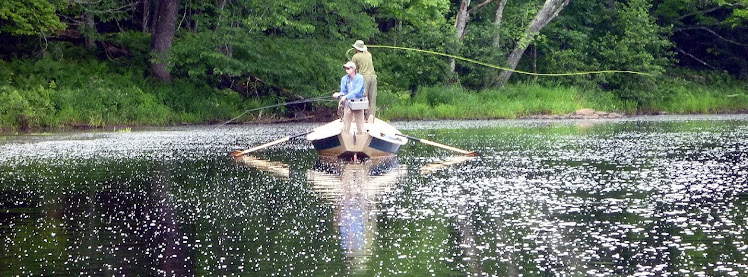
Bio-Glow, produced by Loon Outdoors, is strike indicator putty that also glows in the dark when charged with a UV light or a regular flashlight.
OVERVIEW
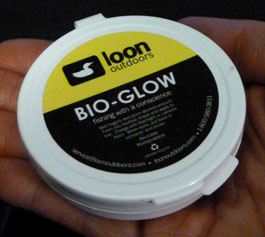 This pale yellow product did not leave a favorable first impression. I opened the lid and the Bio-Glow was stuck to the container’s top and bottom like freshly chewed gum sticks to a shoe. When I removed the putty from the lid, that tacky stuff really stuck to my fingers and it was difficult to thoroughly get off my skin. Furthermore, to float it on the stream I had to use larger diameter putty than the diameter of Thingamabobber I normally use.
Sounds pretty grim, right? Well, I actually started to like the material a little… then a lot. Now I wish I’d ordered another 1-2 containers of Bio-Glow or its non-glowing sibling, Biostrike.
As the directions read, wet hands when using the material. Do this and there won’t be sticky putty on your fingers! Streamside, it worked beautifully. Fingers wet, I pulled out the desired amount and pinched it around my leader. Done. If I wanted to slide it up or down my leader, I did so and pinched the putty down again. Then, I got on with the fishing. So very fast & simple!!
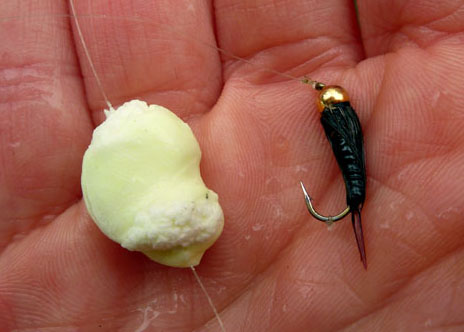
I did have to apply more Bio-Glow than I expected to need. I pinched off an amount similar to the diameter of indicator I typically use. The Bio-Glow sank. I added a bit more and it floated for 5 seconds or so before slowly drifting subsurface (It still indicated fish this way & provided a slower fly descent..hmmm..). Finally, I added a little bit more and the indy putty floated fine with my 5/32” tungsten bead-head sz 12 nymph and sz 18 dropper. I did expect a heavy splat but that didn’t happen. Was it a delicate presentation? No, but it didn’t land much differently than casting with the other style of indy.
 The single piece of Bio-Glow was my indicator for at least 2 hours before I lost it. This timeframe included working my flies free from snags, and hooking, fighting and landing fish. It never moved from its original position on the leader unless I moved it. And unlike my plastic indicators or the foam ones others use, the Loon indicator putty is biodegradable! The next day, I used the putty again. Only fishing for a short time with an indicator, I removed and returned it to its container to be used another day.
I have not fished with this material at night. However, I ‘charged’ it with light and took pictures. The initial very bright light dimmed quickly but left a good amount of glow afterward. Even after 10 minutes a smidge of glow remained. The autofocus light on my camera continued to recharge the Bio-Glow so I couldn’t accurately depict how much the glow decreased over time. To use this at night in current, I’d estimate that its optimal use would be 2 minutes prior to wanting to charge it again. In still water, I suspect 5 minutes max of fish time between needed charges. I hope to do some night fishing in April and will update this post if I do.
RECOMMENDATION, MISC, UPDATES
At this time, I recommend giving Bio-Glow ($7.95/1.0 oz) a try. Just like anything, it may not be optimal for all situations but I think it will do the job - & quickly- in a lot of them. It’s extremely easy to connect to and reposition on the leader & that increases actual fishing time. It stays in place in most situations and is meant to be re-used. If lost, it is biodegradable. After moving the indicator, a small amount of residue remains on the leader but is easily removed. If you like the idea of a putty indicator but don’t need it to glow, Loon Outdoors also makes Biostrike ($7.50/1.0 oz), which is available in a few colors. Check out Bio-Glow at your local fly shop or click this link to visit the Loon Outdoors website: http://www.loonoutdoors.com/products.html#bio-glow
How much bang there is for your buck simply depends on how much weight you have below the indicator & how much putty you return to the container after each fishing trip. The container is similar in diameter to a tippet spool, but twice as tall. A firmer container or slightly domed lid would lessen the inconvenience of the tacky putty becoming pressed against the lid. I used Bio-Glow for the first time when air temperatures hovered between 35-40*F. The product was also kept slightly warm as it was located on an inside pocket of my wading jacket. I am very curious to learn how well it will hold up to Midwestern summer temperatures (& freezing winter temperatures) and if the ease of application will change. I am looking forward to using it again. Over time, I suspect updates will be added to this post.
PROS:
PROS:
*Easy to use or to adjust up/down leader. *Takes seconds to add to leader or to adjust. *Remained in place on leader for prolonged time. *Re-useable. *Biodegradable & environmentally friendly. *Compact container. *Can glow in the dark.
CONS:
*May need more putty than expected. *Container design makes putty stick to lid. *Possibly better chance to lose a putty indy than another style of indy. *Cost/use may be a con depending on how much product is required for the individual’s needs & environment.
Updates
3/22-23/13: I used 1 Bio-Glow indicator for 1.25 days of nymph fishing. I made another indicator after the original got lost from my line while I was bushwhacking through some pretty thick stuff. Temps were ~31-35* (I had to break ice off my guides on day 1) and Bio-Glow did stiffen, causing me to take a tiny bit longer to remove from container & place on leader. No big deal. It also seemed to take a little less product to float my dropper rig set-up (less than I reported in initial review) and at one point I even had split shot on the rig. Does it float better when colder or is it me? Later in the trip, esp the next day, I did have to move the Bio-Glow back into position a few times as it had slid down to the fly. Once I gave a little pinch-twist to the body of the indicator -not just the ends- it remained in place. Again, it was colder, I'd been fishing with it for many hours, and I was fishing an area with beaver dams with higher silt content (Bio-Glow did pick a little of this up). It was still much easier and quicker to use than regular strike indicators & I'm fishing more efficiently because of this.
12/2013: If putty starts to accumulate on the exterior of the container or interior of the lid, it becomes difficult to open the lid of Bio-Glow's shallow container.
Updates
3/22-23/13: I used 1 Bio-Glow indicator for 1.25 days of nymph fishing. I made another indicator after the original got lost from my line while I was bushwhacking through some pretty thick stuff. Temps were ~31-35* (I had to break ice off my guides on day 1) and Bio-Glow did stiffen, causing me to take a tiny bit longer to remove from container & place on leader. No big deal. It also seemed to take a little less product to float my dropper rig set-up (less than I reported in initial review) and at one point I even had split shot on the rig. Does it float better when colder or is it me? Later in the trip, esp the next day, I did have to move the Bio-Glow back into position a few times as it had slid down to the fly. Once I gave a little pinch-twist to the body of the indicator -not just the ends- it remained in place. Again, it was colder, I'd been fishing with it for many hours, and I was fishing an area with beaver dams with higher silt content (Bio-Glow did pick a little of this up). It was still much easier and quicker to use than regular strike indicators & I'm fishing more efficiently because of this.
12/2013: If putty starts to accumulate on the exterior of the container or interior of the lid, it becomes difficult to open the lid of Bio-Glow's shallow container.

