With three napkins from Subway and a load of hand-picked wood, my thoughts were on coaxing up a nice campfire and setting to work on blackening some hot dogs. The day's fish were also on my mind but not on the menu.
With late-evening sights of an Iowa summer as a backdrop, I looked past my fire to the Turkey River. Just as I wished for fish-sign to ring the watery surface, it appeared in silence, and I watched the rings merge and fade with the ripples of a slow current. Locusts buzzed and the fire popped.
The waters of small rivers and streams enrich my soul and return to me the peace that so frequently slips away during the work hours, days, and weeks. No matter the rewards; the beeps, alarms, & people-sounds of my work in healthcare still extract a toll on me.
Three weeks ago, nearing the latter half of August, I sat in the same place, same chair, overlooking a campfire along this river for the first time. I never thought I'd light a campfire when tenting solo, but acting on a whim may have started a comforting new habit.
That weekend threatened wind and rain. Twenty to thirty-mph wind reigned supreme while clouds and sun battled for second place. The rain never came despite the forecast, but oddly enough, planning smallie Iowa float trips nearly always seem to elicit bad-weather forecasts.
I'd needed to escape the day-to-day world and rediscover my peace. Sharing this with like-minded friends would have been welcome, but I ultimately explored new water alone & had been grateful to do it.
And now, 3 weeks later, I sit here again in my Farm & Fleet clearance patio chair. My pen, paper, headlamp & Kentucky Bourbon Barrel Ale keep me company by the fire. Darkness is nearly here, & swallows, silhouetted by calm river water reflecting rays from a setting sun, will shape my memory of this extended weekend.
This time, yes, work was still stressful - very stressful - but this time I really wanted to enjoy the company of friends on what might be the final smallie float of the year. But, it just didn't work out that way. All were too busy doing other things.
So, once again, I'd made plans for a solo-camping & smallmouth float trip.
Strange, but it seems like I've returned to where I started. But there aren't many fly anglers, especially in the Midwest. Back in 2008, when my only fly fishing friend lived 8 hours away, I mostly fished, traveled, made lots of mistakes, and got lost -- alone.
Then I learned to network - at the local fly fishing club, fly fishing shows, on-line, with conventional anglers, and then slowly the world opened up. I've been able to travel to go fishing with others in NC, MI, MT, and AK. I can text, call, or email fly fishing friends anytime. I lay out our club's newsletter, and there are so many known friendly faces at the shows.
Yet, it still frequently remains hard to find someone who has the time to go fishing for a few days, especially on smallmouth float trips, which I love nearly as much as fishing for musky.
I'm pretty happy by myself, which is probably a great reason why I shouldn't be alone too much. When does finding a little peace transition into becoming a recluse?
But, I personally know people who won't go somewhere unless they have company. Some of my best discoveries & most memorable times have been shared with others. But my memories & my life would be far less rich if I'd waited for company to happen prior to venturing off on many things fly fishing. The ironic thing is that I've met many of my fishing friends because I was willing to go someplace on my own & was willing to meet others.
I wonder if coming full circle also means that I will get to meet more wonderful people.
I live my life, and life has been great. If I'd waited for life to happen to me, I think I'd still be waiting, or I'd have given up on this fly-fishing thing. Don't wait! And then someday, maybe we'll meet on the water & share some stories beside an evening campfire.
(Written fireside 9-13-15 & finished while lounging in bed 12-13-15, because 100% heavy rain forecast would make for poor fishing and unsafe driving on gravel roads...& it's deer shotgun season. But, I did fish yesterday & it was good... but it wasn't enough. I think you know the feeling.)
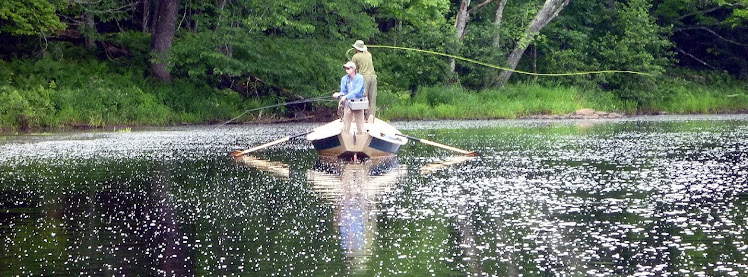
Sunday, December 13, 2015


Sunday, June 14, 2015
Detours
On a slow fishing day, if I can't take any pictures of fish, or friends with fish, there is always something else to do and to to take pictures of:




But... when the fish are biting, these are the people and things I like to have pictures of:


Happy fishing and I hope you enjoy the outdoors as much as I do!!
Sunday, May 31, 2015
Musky Tackle, Prep, Fishing
Excellent article on how-to and prep when fly fishing for musky! The guys pictured (Brad Bohen and Lucky Porter) are also exceptional anglers and guides.
http://www.flyfisherman.com/uncategorized/fly-fishing-for-muskie/
http://www.flyfisherman.com/uncategorized/fly-fishing-for-muskie/
the Silent-Water Day
The "silent-water day" is a day bereft of much of
any life aside from myself & my fishing partner. One is lucky to hear woodland sounds or
birds, & at and below the water's surface is utter desolation. I struggle to stay on my A- or even my B-game
on these days. But, I know that to land
a musky on one of these days would be the epitome of success and simply
finding one and enticing it to follow would be cause to get jazzed up. My gut says a musky would not mess with a
follow on a silent-water day. They are
either going to strike or not. Do or
don't do, but likely the human version of sleep in all day. That is the kind of day that brings to life
the much-used saying, "A fish of 1,000 casts."

May God bless you with plenty of fish landed at your boat, successful
catch and release, and just enough silent-water days to reflect upon and appreciate your memories and the path you have chosen to create a well-lived
life.
~Twitch, May, 31, 2015
~Twitch, May, 31, 2015

Wednesday, May 20, 2015
Niklaus Bauer Displays Keen Pike Perspective
A very cool & fishy FaceBook friend & musky brother posted a link to a YouTube video on FB tonight. I figure if Corey posts something, it's worth a look-see. Almost thirty minutes later, I'm posting his link & another link to my blog. Why? The Swedish host of these episodes of Fly TV, Niklaus Bauer, is excellent. It seems strange that I've only found Niklaus and Fly TV on YouTube & not on a major outdoor television network. The man is an excellent angler, personable, & shares what he knows about tackle, flies, and pike while obviously having fun. I'd hire him for a pike (or musky!) trip in a heartbeat!!
https://www.youtube.com/watch?v=Oh3VYrUBlqM
https://www.youtube.com/watch?v=sqOKoveDm04
https://www.youtube.com/watch?v=Oh3VYrUBlqM
https://www.youtube.com/watch?v=sqOKoveDm04
Saturday, May 9, 2015
Striking the Balance Between Fly Fishing and Casting
Last fall a friend of mine laid it on the line about my day's less-than-stellar fly casting while we hunted for musky. The up-side to that brutal but needed conversation was the man would not have said the things he'd said if he didn't feel I should have been & was capable of becoming a better caster.
My goal since that day was to finally step up my game, throw out the bad habits, & start casting some serious line. But the same problem continued to stonewall me.
 Hello. My name is Lisa. Some know me as "Twitch", & I am
addicted to fly fishing...
Following the fall musky frenzy, it was time to go trouting. Next, I learned I could actually fish for the musky cousins, Mr. & Ms. Pike, intermittently during the winter & early spring! Oh my! Then, as those early spring days this year grew longer and warmer, I simply could not get smallmouth bass out of my mind. I even fished a local creek for smallies well before my rational mind knew they would have moved there from the Mississippi River. Every cast equals hope, right? Of course, now it's time to fish for musky again.
My problem is that I'm fishing and I'm fishing as much as a person who has to work full-time can fish. My house is a mess, I substitute take-out for the grocery store & cooking, & I should be visiting family more often. Yet, I choose to chase fin, again and again.
One might think fishing is the perfect opportunity to improve the casting game. However, if the bulk of the waters one fishes are skinny waters, it's easy to roll cast, get away with lobbing, & hone all sorts of bad habits that make for a poor caster of a 10 wt rod being loaded by 10 wt sinking line and a large, wet musky fly.
 Today, I and other Hawkeye Fly Fishing Association (HFFA) members had the opportunity to share our skills with others at the annual K&K Casting Clinic, sponsored by K&K Hardware, Bettendorf, IA. Dan Johnston, a St Croix Rod rep from Cedar Rapids, IA, was the primary instructor & he also enticed another instructor, Jen Ripple, editor and founder of Dun Magazine, to the clinic. Dan's casting skill and teaching ability are well-known & respected in the region. Dan reported we had a record turnout for the event held at Bettendorf's Middle Park Lagoon. At the start of the clinic I counted 43 attendees and believe we met or beat the 50 people attendance mark.
As is the case when teaching others anything, the instructor can learn a lot. In my case, I learned I was a better & more confident instructor than last year. I also learned that there are a few skills that I can get away with performing but am not yet skillful enough to teach. At those times, I asked other HFFA members or Dan for assistance with the particular caster & then I, too, paid close attention to the instruction.
At the end of the day, Dan kindly gave me a bit of one-on-one time. I learned to initiate my haul just as the fly line left the water and I also polished-up my roll casting technique. Dan then gave me a couple of casting exercises to practice.
I neglected to share with you that this lagoon (pond) is located right next to a small creek inhabited by smalllies. My intention was to fish the creek after the casting clinic had ended. I'd loaded my car with rod, reel, and fanny pack of everything I needed to fish for smallies early this morning.
But, I didn't fish. I stayed at the lagoon and practice-casted. I honed my newly-refined roll casting technique. I also practiced one of Dan's casting exercises & realized how many levels that exercise could improve my casting abilities!
Feeling the tiredness that likely comes from being dehydrated & exposure to a day of sun, I gave another longing glance at the small creek and its finned inhabitants, but headed for home.
Almost 2 hours later, I pause to look out the living room window while finishing this blog post. My ginger ale is nearly gone and I see that it's now cloudy outside. In so many ways, I reflect that now is a perfect time to go fishing. With a clear conscience, I go. ~May 9, 2015
My goal since that day was to finally step up my game, throw out the bad habits, & start casting some serious line. But the same problem continued to stonewall me.
addicted to fly fishing...
Following the fall musky frenzy, it was time to go trouting. Next, I learned I could actually fish for the musky cousins, Mr. & Ms. Pike, intermittently during the winter & early spring! Oh my! Then, as those early spring days this year grew longer and warmer, I simply could not get smallmouth bass out of my mind. I even fished a local creek for smallies well before my rational mind knew they would have moved there from the Mississippi River. Every cast equals hope, right? Of course, now it's time to fish for musky again.
My problem is that I'm fishing and I'm fishing as much as a person who has to work full-time can fish. My house is a mess, I substitute take-out for the grocery store & cooking, & I should be visiting family more often. Yet, I choose to chase fin, again and again.
One might think fishing is the perfect opportunity to improve the casting game. However, if the bulk of the waters one fishes are skinny waters, it's easy to roll cast, get away with lobbing, & hone all sorts of bad habits that make for a poor caster of a 10 wt rod being loaded by 10 wt sinking line and a large, wet musky fly.

As is the case when teaching others anything, the instructor can learn a lot. In my case, I learned I was a better & more confident instructor than last year. I also learned that there are a few skills that I can get away with performing but am not yet skillful enough to teach. At those times, I asked other HFFA members or Dan for assistance with the particular caster & then I, too, paid close attention to the instruction.
At the end of the day, Dan kindly gave me a bit of one-on-one time. I learned to initiate my haul just as the fly line left the water and I also polished-up my roll casting technique. Dan then gave me a couple of casting exercises to practice.
I neglected to share with you that this lagoon (pond) is located right next to a small creek inhabited by smalllies. My intention was to fish the creek after the casting clinic had ended. I'd loaded my car with rod, reel, and fanny pack of everything I needed to fish for smallies early this morning.
But, I didn't fish. I stayed at the lagoon and practice-casted. I honed my newly-refined roll casting technique. I also practiced one of Dan's casting exercises & realized how many levels that exercise could improve my casting abilities!
Feeling the tiredness that likely comes from being dehydrated & exposure to a day of sun, I gave another longing glance at the small creek and its finned inhabitants, but headed for home.
Almost 2 hours later, I pause to look out the living room window while finishing this blog post. My ginger ale is nearly gone and I see that it's now cloudy outside. In so many ways, I reflect that now is a perfect time to go fishing. With a clear conscience, I go. ~May 9, 2015
Friday, March 27, 2015
A Good, Long Weekend in NE Iowa & the Twin Cities (3/20-22/15)

I drove to the NE Iowa Driftless region Friday night & car camped along Canoe Creek. It is one of my favorite streams - not because it is a great trout stream. It isn't. We have caught trout from this stream, I've also caught suckers, a pumpkinseed, & smallies... but all in very, very small numbers. The stream bed has changed so much every year & especially on this stretch. It isn't changing for the better with regard to maintaining healthy fish populations. Nature doesn't always treat its resources very well, either! However, this little stream still continues to tug at my heart. I did fish Coldwater Creek for a very short time prior to heading to the TC. I was gifted with one par brown on what I was told was a slow fishing day.


My friend & fellow trouter, Jeff Moore, was asked to tie at the expo. His table display was excellent & he also set up a 2nd vise so others could tie a fly pattern with him. I did get to watch Jeff and another man tie Jeff's "Moose Mane Midge", a fly that has also landed me a trout or two!

My trip to the Twin Cities would have been a huge disappointment if I had not visited Pho Tau Bay in St. Paul! I had longed for 3 years to return & try their vegetarian pho. However, after skipping lunch I was too hungry & went with #10 - pho thai vo bien, which included beef and beef meatballs, and then a fruity coconut concoction, che thai, a drink recommended by my petite, soft-spoken server. She appreciated when I was able to pronounce the menu items correctly, after a few tries! I also visited an outdoor store in Minneapolis & have happily found a moderate capacity backpack to fit me. My lady salesperson was highly knowledgeable & fit me well. Sadly, the owner of the store does not stock this backpack or many others in women's versions. I could not leave with a backpack & will likely buy elsewhere due to this. I made certain my salesperson does not work on commission.

Friends with whom I stayed at the motel texted/called me when I was at the restaurant to tell me about road conditions as they headed south of the TC, back to Iowa. I think they had about a 20 mile band of bad driving. When I left Pho Tau Bay, it was spitting snow. As I drove, the band of snow had gotten much thicker. I was about 20 miles from Decorah, IA, prior to being able to drive the speed limit. But, it is not surprising to drive through this weather in March in Minnesota!! I elected not to car camp and fish again in Decorah region. I had hoped & failed to go piking back home in lieu of this. I learned that Decorah got another 3" of snow that night.
Saturday, December 27, 2014
HFFA 2015 FLY FISHING SHOW ~ Dubuque, IA, Feb 20-22
Monday, November 24, 2014
NO MORE WORDS - MUSKY DON'T CARE ~ The WI-MN Diaries (Part 8, Oct. 20-24, 2014)
“Stop going through the motions. I know it’s a hard day but you gotta put some life into that fly …and you’ve got an excuse for everything I say.”
ouch.
Those recent comments from a friend reminded me of a short conversation from years ago. Back in the college days –my early 20s- I asked my fiancé one of the silly questions that men dread to answer. “Does my butt look big?” His reply that I will never forget: “Lisa, I love you just the way you are, but you are a little out of proportion.” I still consider that response to be one of the nicest things anyone has ever said to me. I got back into shape.
Mentor
Whether it’s about physique, fishing, or something else… To take the risk in a relationship, to trust that the questioning person really wants the truth, and to be the one to provide that eye-opening answer takes guts. It’s a likely oddity, but sometimes I’m so surprised by what I learn that I forget to remember it and apply it. Years ago, I told the same fishing friend that I wanted him to smack me upside the head to get me to listen- if that was what needed to be done. Either it took a while for him to believe I meant it or maybe I just fished that poorly during this recent trip, but after the initial shock and mortification evoked by his words wore off, I actually felt a stronger appreciation for our friendship. When it mattered, he simply gave to me what I had asked of him in a way that really made me listen.
The Path Less Traveled
“You should fire that fly”, I was told. Maybe that particular fly, but I stubbornly fished it a little longer. That white fly, despite being a fly that moved with a little wiggle but mostly like a stick with a marabou tail, had had a couple follows and a strike when I fished alone the previous day. These flies, originally tied by Rich McElligott, are great bass flies, but I threw some estrogen into the recipe, added 5/0 hooks and they became musky flies. I think if they could, the popular fur, feather, big profile, articulated, testosterone flies would bully these inexpensive, quick-to-tie, yarn and marabou flies. I think other anglers might similarly snub them, requiring that the nerd flies hook up twice as many musky prior to proving their worth. I tied up a couple for my Wisconsin, 5-day musky fishing trip.
Funny thing, though, I think that some of the time (spring, early summer) these hopped-up versions of a Shannon’s Fly could out-perform traditional, artistically-rendered musky flies. When the tail is wrapped with just the right amount of tension –the tricky part- the action of the nerd fly is amazing. It zigs, it zags. It looks like an injured baitfish struggling on & just below the water’s surface.
On day 4 of my trip, I fished my variegated version of this fly on new water. I did have a couple follows when initially fishing a more traditional fur/feather pattern of mine called BB’s Forage, but the follows, no matter how exciting, weren’t strikes. I switched to the variegated fly and cast to a steep drop-off near the bank. After a few strips, fish on! Following a decent fight, I landed my only musky during a trip that had been graced with musky follows and strikes to both traditional and non-traditional flies. Despite some laughable esox-angler antics at the watery landing zone, the 36-inch long musky with a surprisingly narrow head was safely released. I yelled and whooped it up under the drizzling, clouded sky of a beautiful October day.

To grow and be the best fly fisher one can be, it is necessary to be open-minded and willing to learn from others. However, it’s also important to balance this with acting on one’s own thoughts even if they don’t follow the norm. Under particular circumstances –often pertaining to big fish opportunities- I ask myself, “Will I regret this if I don’t do it?” When the answer has been “Yes”, I’ve done it & now have a surprising number of memorable smallie, trout, and musky stories.
My fly fishing recipe to success includes learning from others, learning from myself, exploring the path less traveled, and practice. Ironic, but when I strike out on my own and am finding success by my own hand, what others have taught me becomes vitally active in my mind. While I might find success on the path less traveled to be more satisfying, I can’t honestly say that I’ve ever landed a fish in solitude without the help of my angling friends. And, by the way, when I haven’t technically found success, I’ve still learned something and generally enjoyed the journey. I’m betting that anyone who is passionate about fly fishing & the outdoors understands this.

If You Keep Doing What You’ve Always Done…
…you’re going to get what you’ve always gotten. When fishing, I often mumble this to myself. Usually, it comes after a couple of mild cuss words or a “Dangnabbit!” I really try not to cuss but those “duh” moments that occur when fishing tend to set me off for a few seconds. I have mini fisher-tantrums.
I can only imagine how a guide or helpful friend feels after coaching the angler, again and again, how to do something differently & more effectively, only to have the angler continue to do what he/she has always done, despite that angler’s best or nonexistent efforts to change.
And so that was the way it was during my 2nd full day of the October musky fishing trip. I’d spent that day with a friend, who is sort of a “Professor Musky”. Ironic, but I think this was the first time I came relaxed, well-rested and prepared, compared to other whirlwind fishing outings with this man. And it was possibly my worst day of fly casting for musky.
It struck me that all of the tight quarters, small water casting I’d been doing for smallies, salmon, and even musky during the previous 4 months had unknowingly bred some bad casting habits in me. I was still having trouble mastering a couple basic skills when using a musky rod versus a trout rod. At times, I was embarrassed. He coached. He repeated himself. I questioned and casted. He repeated himself. I debated things. I tried to understand and change my bad habits. He coached, and I took deep breaths & practiced new techniques. I had a beer. He did not. He’s never taken a beer with me until a musky has been boated. We grew more silent.
Other than a few crows, all of land, sky, and water appeared barren of life. The absolute best I can say for myself is that I strip-set the heck out of the snags I got. If one had been a strike, the fish would have been mine. But there weren’t any strikes. It was just one of those days; hope for a miracle. At one point, I realized that the fun was feeling more like work, & likely for both of us. Whether true or not, I sensed that my friend was becoming bored & my spirits waned. I didn’t give up. I never give up, but…
But that is when he said what he said, “Stop going through the motions. I know it’s a tough day but you’ve got to put some life into that fly…”
Enough! The Musky Don’t Care
“…and you’ve got an excuse for everything I say.” So, I livened up the fly and I think the shock of his words shut down my mouth. I was glum and irritated, but after a few minutes that changed. He was right about my fishing, but was he right about everything? Had I been offering excuses or reasons to my failings following his instruction? Both?
Then, I realized that it didn’t matter. The musky don’t care. They don’t care why the angler chokes on a back cast or why a fly is presented in a particular manner. They don’t care! What the musky cares about is if the object in front of it either looks like a suitable meal or looks like a threat. It doesn’t care how or why the object appears, it just has be there and look the part to elicit an attack.
My friend, he thinks like em. Reasons & excuses are the same to him and he doesn’t care. He cares about the outcome of the cast & if the fly presents like a meal or a threat. He cares that I catch fish and he cares that I want to become a better angler. So, he did everything he could do for me on an exceptionally challenging day of fishing. That’s a friend I’ll fight to keep. Strip-set!!
No More Words
When I started fly fishing, throughout all of the snags, knots, failed attempts to hook a fish, & despite the embarrassment of believing a shiner was a different strain of trout simply because it came from a “trout stream”… I could still sense how good it would feel to have just enough skill to cast to and land a couple fish. Funny, but I truly knew what the pleasure would feel like before I felt it. That’s what kept me going. Then, the instruction, intermittent practice, and a fair amount of fishing time improved my skills to where they are today.
To be completely honest, I’d place myself at the lower half of average when it comes to overall fly fishing ability. But now there are the occasional glorious days when I sense how good it would feel to consistently fish as a better-than-average angler.
At this time, guides and friends can’t do much more to push me off my angling plateau & up to that next level of fly fishing. Instruction alone won’t take me farther. Excuses certainly won’t do it. Thanks in part to friends, I now know what needs to be done yet I’m the only one who can finish the job. Only work –consistent practice- will take me to the next level & to yet another path less traveled. I'd like to go there. I think that's where one finds the big musky. ~Twitch (11/24/2014)

ouch.
Those recent comments from a friend reminded me of a short conversation from years ago. Back in the college days –my early 20s- I asked my fiancé one of the silly questions that men dread to answer. “Does my butt look big?” His reply that I will never forget: “Lisa, I love you just the way you are, but you are a little out of proportion.” I still consider that response to be one of the nicest things anyone has ever said to me. I got back into shape.
Mentor
Whether it’s about physique, fishing, or something else… To take the risk in a relationship, to trust that the questioning person really wants the truth, and to be the one to provide that eye-opening answer takes guts. It’s a likely oddity, but sometimes I’m so surprised by what I learn that I forget to remember it and apply it. Years ago, I told the same fishing friend that I wanted him to smack me upside the head to get me to listen- if that was what needed to be done. Either it took a while for him to believe I meant it or maybe I just fished that poorly during this recent trip, but after the initial shock and mortification evoked by his words wore off, I actually felt a stronger appreciation for our friendship. When it mattered, he simply gave to me what I had asked of him in a way that really made me listen.
The Path Less Traveled
“You should fire that fly”, I was told. Maybe that particular fly, but I stubbornly fished it a little longer. That white fly, despite being a fly that moved with a little wiggle but mostly like a stick with a marabou tail, had had a couple follows and a strike when I fished alone the previous day. These flies, originally tied by Rich McElligott, are great bass flies, but I threw some estrogen into the recipe, added 5/0 hooks and they became musky flies. I think if they could, the popular fur, feather, big profile, articulated, testosterone flies would bully these inexpensive, quick-to-tie, yarn and marabou flies. I think other anglers might similarly snub them, requiring that the nerd flies hook up twice as many musky prior to proving their worth. I tied up a couple for my Wisconsin, 5-day musky fishing trip.
Funny thing, though, I think that some of the time (spring, early summer) these hopped-up versions of a Shannon’s Fly could out-perform traditional, artistically-rendered musky flies. When the tail is wrapped with just the right amount of tension –the tricky part- the action of the nerd fly is amazing. It zigs, it zags. It looks like an injured baitfish struggling on & just below the water’s surface.
On day 4 of my trip, I fished my variegated version of this fly on new water. I did have a couple follows when initially fishing a more traditional fur/feather pattern of mine called BB’s Forage, but the follows, no matter how exciting, weren’t strikes. I switched to the variegated fly and cast to a steep drop-off near the bank. After a few strips, fish on! Following a decent fight, I landed my only musky during a trip that had been graced with musky follows and strikes to both traditional and non-traditional flies. Despite some laughable esox-angler antics at the watery landing zone, the 36-inch long musky with a surprisingly narrow head was safely released. I yelled and whooped it up under the drizzling, clouded sky of a beautiful October day.
To grow and be the best fly fisher one can be, it is necessary to be open-minded and willing to learn from others. However, it’s also important to balance this with acting on one’s own thoughts even if they don’t follow the norm. Under particular circumstances –often pertaining to big fish opportunities- I ask myself, “Will I regret this if I don’t do it?” When the answer has been “Yes”, I’ve done it & now have a surprising number of memorable smallie, trout, and musky stories.
My fly fishing recipe to success includes learning from others, learning from myself, exploring the path less traveled, and practice. Ironic, but when I strike out on my own and am finding success by my own hand, what others have taught me becomes vitally active in my mind. While I might find success on the path less traveled to be more satisfying, I can’t honestly say that I’ve ever landed a fish in solitude without the help of my angling friends. And, by the way, when I haven’t technically found success, I’ve still learned something and generally enjoyed the journey. I’m betting that anyone who is passionate about fly fishing & the outdoors understands this.
If You Keep Doing What You’ve Always Done…
…you’re going to get what you’ve always gotten. When fishing, I often mumble this to myself. Usually, it comes after a couple of mild cuss words or a “Dangnabbit!” I really try not to cuss but those “duh” moments that occur when fishing tend to set me off for a few seconds. I have mini fisher-tantrums.
I can only imagine how a guide or helpful friend feels after coaching the angler, again and again, how to do something differently & more effectively, only to have the angler continue to do what he/she has always done, despite that angler’s best or nonexistent efforts to change.
And so that was the way it was during my 2nd full day of the October musky fishing trip. I’d spent that day with a friend, who is sort of a “Professor Musky”. Ironic, but I think this was the first time I came relaxed, well-rested and prepared, compared to other whirlwind fishing outings with this man. And it was possibly my worst day of fly casting for musky.
It struck me that all of the tight quarters, small water casting I’d been doing for smallies, salmon, and even musky during the previous 4 months had unknowingly bred some bad casting habits in me. I was still having trouble mastering a couple basic skills when using a musky rod versus a trout rod. At times, I was embarrassed. He coached. He repeated himself. I questioned and casted. He repeated himself. I debated things. I tried to understand and change my bad habits. He coached, and I took deep breaths & practiced new techniques. I had a beer. He did not. He’s never taken a beer with me until a musky has been boated. We grew more silent.
Other than a few crows, all of land, sky, and water appeared barren of life. The absolute best I can say for myself is that I strip-set the heck out of the snags I got. If one had been a strike, the fish would have been mine. But there weren’t any strikes. It was just one of those days; hope for a miracle. At one point, I realized that the fun was feeling more like work, & likely for both of us. Whether true or not, I sensed that my friend was becoming bored & my spirits waned. I didn’t give up. I never give up, but…
But that is when he said what he said, “Stop going through the motions. I know it’s a tough day but you’ve got to put some life into that fly…”
Enough! The Musky Don’t Care
“…and you’ve got an excuse for everything I say.” So, I livened up the fly and I think the shock of his words shut down my mouth. I was glum and irritated, but after a few minutes that changed. He was right about my fishing, but was he right about everything? Had I been offering excuses or reasons to my failings following his instruction? Both?
Then, I realized that it didn’t matter. The musky don’t care. They don’t care why the angler chokes on a back cast or why a fly is presented in a particular manner. They don’t care! What the musky cares about is if the object in front of it either looks like a suitable meal or looks like a threat. It doesn’t care how or why the object appears, it just has be there and look the part to elicit an attack.
My friend, he thinks like em. Reasons & excuses are the same to him and he doesn’t care. He cares about the outcome of the cast & if the fly presents like a meal or a threat. He cares that I catch fish and he cares that I want to become a better angler. So, he did everything he could do for me on an exceptionally challenging day of fishing. That’s a friend I’ll fight to keep. Strip-set!!
No More Words
When I started fly fishing, throughout all of the snags, knots, failed attempts to hook a fish, & despite the embarrassment of believing a shiner was a different strain of trout simply because it came from a “trout stream”… I could still sense how good it would feel to have just enough skill to cast to and land a couple fish. Funny, but I truly knew what the pleasure would feel like before I felt it. That’s what kept me going. Then, the instruction, intermittent practice, and a fair amount of fishing time improved my skills to where they are today.
To be completely honest, I’d place myself at the lower half of average when it comes to overall fly fishing ability. But now there are the occasional glorious days when I sense how good it would feel to consistently fish as a better-than-average angler.
At this time, guides and friends can’t do much more to push me off my angling plateau & up to that next level of fly fishing. Instruction alone won’t take me farther. Excuses certainly won’t do it. Thanks in part to friends, I now know what needs to be done yet I’m the only one who can finish the job. Only work –consistent practice- will take me to the next level & to yet another path less traveled. I'd like to go there. I think that's where one finds the big musky. ~Twitch (11/24/2014)
Tuesday, September 9, 2014
7:06 PM. A Rainy Evening at the Home of a Fly Angler
A gentle rain, an infrequent smattering of light wind, and it's warm enough for one to wear shorts but cool enough to comfortably wear rain gear; I'm yearning for another day like this & the opportunity to spend it on the water with a fly rod in hand. Sitting here on my patio chair, tucked in between the bumper of the CR-V and the interior garage wall - toes resting on the driveway- I can almost completely sense the feelings to be born from such a day. Calm and delightful, accented by moments of fishy excitement, with peace gently raining down on all.
Monday, September 8, 2014
When Your Fly Fishing Gear Stinks, Life is Good
If I knew I was going to die tomorrow, I wouldn't be upset if my house was a mess. I am not neat. I'm only going to live once and my priorities are in order! That being said, I still remember opening up a buddy's wader tote years ago & getting a whiff of the nasty, bacterial chemical cocktail that was brewing, I was pretty grossed out.
It's amazing how things (the same things you'd think would likely remain repulsive) change.
Work, weather, timing... all sorts of things created a logjam to this year's warm water fishing opportunities. Feeling that warm water time was swiftly winding down, I simply decided it was time to do some small river fishing, come low or high water.
As it turned out I did have both water situations. The Upper Iowa River was running a bit high to easily find the holding areas of smallmouth bass. The Volga River was running too low to float any kind of watercraft. A cold front had also come through.

 On Saturday, I floated the first 2/3 of the Upper Iowa River solo. Much of this stretch flows right through Decorah, IA. Other than one little smallie striking a topwater pattern at the first bend of the river, there were no fishy tugs on my line and the water remained undisturbed by fish. After working through color, pattern, size, & retrieve changes, I switched to a couple "desperation flies" but continued fishless. Around 4 pm I hooked up with a few friends, "T" and her son Ben, & T's DNR co-worker Chris. The rest of the float included DNR smallie sampling to check for mercury so I'm happy to write we found a few smallies willing to make tissue donations! I ended up with 2 in the net and lost 2 more. Chris landed another 2-3 fish. We also spotted a mink swimming in the water. It was a beautiful day, we had fun, and I knew that during a particular stretch of my solo float, had the water been lower, I likely would have had to drag my pontoon a long way. It was dusk when we left the river.
 I camped that night along a creek & on Sunday, I slept in. Then, with a wet tent drying in the back of my CR-V, I headed to the Volga River, near Fayette, IA. I had debated visiting a trout stream, but I heard the tick, tick, ticking away of the warm water fishing season. After carefully bumping down a woodsy dirt road, I fished an unfamiliar stretch of the Volga and ended up with 6-7 smallies and likely lost the same amount. Generally, I waded from one hole to another, enjoying the weather, the scenery, wet wading, feisty fish, and simply being alive! I still love the juxtaposition of feeling like I'm on a trout stream yet lifting smallmouth bass from my net. While fishing, I was also treated to the sight of another beautiful mink meandering around the rocky bluffs tracing the river's edge.
My longest fish of the day measured about 13 inches. While tearing down my rod, the 3 guys who had been spin fishing for about an hour returned with 3 smallies that ran from 16-18" long. Whoa! I have my ideas on how they accomplished this, and am looking forward to returning to this stretch of river.
 After the nearly 3 hour drive home, I began unloading the CR-V of its contents. While I got a stray whiff of something during the drive, it wasn't until I got the suv into the garage that I truly smelled the nasty, bacterial chemical cocktail brewing inside my vehicle! I might have squinched up my nose, but I was smiling, too. Heck, I'm smiling now! That swampy odor was simply the left-over remains of a great weekend of fly fishing!
While I promptly removed the smelly culprits, my net and fishing sandals, from the vehicle, I thought of my buddy's wader tote. I hope his tote smells just as badly today as it did years ago. After all, it's important to keep the priorities straight!

It's amazing how things (the same things you'd think would likely remain repulsive) change.
Work, weather, timing... all sorts of things created a logjam to this year's warm water fishing opportunities. Feeling that warm water time was swiftly winding down, I simply decided it was time to do some small river fishing, come low or high water.
As it turned out I did have both water situations. The Upper Iowa River was running a bit high to easily find the holding areas of smallmouth bass. The Volga River was running too low to float any kind of watercraft. A cold front had also come through.
On Saturday, I floated the first 2/3 of the Upper Iowa River solo. Much of this stretch flows right through Decorah, IA. Other than one little smallie striking a topwater pattern at the first bend of the river, there were no fishy tugs on my line and the water remained undisturbed by fish. After working through color, pattern, size, & retrieve changes, I switched to a couple "desperation flies" but continued fishless. Around 4 pm I hooked up with a few friends, "T" and her son Ben, & T's DNR co-worker Chris. The rest of the float included DNR smallie sampling to check for mercury so I'm happy to write we found a few smallies willing to make tissue donations! I ended up with 2 in the net and lost 2 more. Chris landed another 2-3 fish. We also spotted a mink swimming in the water. It was a beautiful day, we had fun, and I knew that during a particular stretch of my solo float, had the water been lower, I likely would have had to drag my pontoon a long way. It was dusk when we left the river.My longest fish of the day measured about 13 inches. While tearing down my rod, the 3 guys who had been spin fishing for about an hour returned with 3 smallies that ran from 16-18" long. Whoa! I have my ideas on how they accomplished this, and am looking forward to returning to this stretch of river.
After the nearly 3 hour drive home, I began unloading the CR-V of its contents. While I got a stray whiff of something during the drive, it wasn't until I got the suv into the garage that I truly smelled the nasty, bacterial chemical cocktail brewing inside my vehicle! I might have squinched up my nose, but I was smiling, too. Heck, I'm smiling now! That swampy odor was simply the left-over remains of a great weekend of fly fishing!While I promptly removed the smelly culprits, my net and fishing sandals, from the vehicle, I thought of my buddy's wader tote. I hope his tote smells just as badly today as it did years ago. After all, it's important to keep the priorities straight!
Wednesday, September 3, 2014
'06 Honda CR-V: Is It Possible to Make a Better Fly Fishing and Car Camping Mobile?
Why does your
fishing mobile work for you? How does it
meet your outdoorsy needs? What is so
special about the interior? Have you
altered your mobile? Did you discover
something positively fishy about it after you had it for a while? What is your ultimate, dream-fishing, 4-wheeled go-getter??
I bought my ‘06
Honda CR-V in 2008 with 21,000 miles on it.
I wasn’t keen on the black interior and always thought this model of suv
was a tad homely. However, it was
practical, had proven reliability, and the mpg wasn’t too bad. At the time, the big plus was that I could
flip the rear seat forward and roll my touring bike right in the back without
even removing the bike’s front tire. It
was also suitable for my newly-growing habit: fly fishing. I wasn’t thrilled with my purchase so I didn’t
rust-proof it. The Honda was simply the
most practical purchase I could make. (Tip: If you are going to keep any Honda for a while, rust-proof it!)
Soon, fishing,
fishing road trips and fishing friends eclipsed the time I spent on my bike
saddle. I learned that I had
accidentally purchased the best available fly fisher’s road machine –despite
that you just might disagree!
I’ve heard some
people refer to compact suvs as a girl’s vehicle (Smirk!). This girl values 25 mpg vs. big suv 17 mpg on
6-hour road trips. A shorter wheel base
coupled with my moderate 8.1” of ground clearance has given me access to most gravel-rutted
paths that lead to remote fishing holes.
Narrow, wooded DNR roads are best traversed by vehicles not as wide as
my little house. While my Honda’s AWD is
best-suited for softroading, when I ditched the OEM tires for Cooper CS4s the
Honda performed adequately on gravel and snow.
While I might want it to go offroad like a Jeep, it’s never been
necessary.
Reliable and Practical
Other than
normal wear & tear, a bout with a suicidal Wisco deer, and a couple of
pesky recalls, after 133,000 miles my Honda has had no garage repair time. I expect 300,000 out of this baby. Maybe it will finally need some exhaust work
by then… I can’t say enough about the
CR-Vs reliability.

My machine
has: Decent mpg – although the newer,
small suvs are better; good ground
clearance, esp compared to the newer, small suvs (what are car companies
thinking?!; excellent head room for my
male fishing pals – weird, but all of them are tall. If there is good head room, there is also better
fly rod room! Also, I can store my
deflated pontoon, camping gear, fishing gear, & a medium cooler and still
have room for 2 passengers. There is
also a hidden storage area for rods and other valuables (because the spare tire
is not stored inside the suv). It has
good safety ratings.
Interior
I now prefer the
black cloth seats. They don’t get very
hot in the summer. I don’t have to worry
about dirt and water marks created by dirty, wet hands or wader butts. I can’t grasp why anyone would want an AWD
suv with a sand-colored interior – other than that it would be easier to see
ticks crawling about.

The seats are
also great for car camping. Some people
prefer to sleep in the back of their trucks or suvs. I’ve come to appreciate another set-up. I slide my passenger seat completely forward
and remove the headrest. I recline the
seat back flush with the rear seat and throw down my camping pad, etc. With the ability to recline the rear seat
backs, I can kick back and write, read, or plan for the next day’s fishing
adventure with choices of light from a lamp set on my cooler, a light hanging
from my roof hand grip, or from a headlamp.
Of course, the rear armrest has a cup holder to allow for choice of
beverage. When it’s time for fishing
dreams, my 5’7” frame can almost completely stretch out for a pretty good
night’s sleep. The advantage to not
sleeping in the rear of the vehicle is that when I wake on a cold winter’s
morning, I can simply lean forward, turn the keys, and heat up the CR-V before
worming out of my sleeping bag. In case
of emergency I can get quick access to the driver’s seat.
My center
console is actually a flip-down table that includes cupholders. Space exists under the table and between the
table and the seats. My fly fishing
travel binder always sits in one of those spaces. There is an adequate amount of cubbies for
storage. Nothing beats a van for cool
cubbie spaces but there is only 1 AWD van and it has a long wheel base and
lower ground clearance.
 The interior
roof is great! I have 4 roof
lights. There are 3 nicely-sized, metal latches
on the very rear, interior roof. These
were originally designed for use with child car seats but used by me as part of
my interior rod holder system. Rear above-door
grab handles coupled with bungies also contribute to the rod holder system. And, the roof liner is a felt-like
material. I discovered its benefits a
few years ago. I have a variety of flies
poked in the liner. Gifted flies,
retired flies from memorable fishing days, and flies that needed to dry before
being returned to the fly box hang from the liner. Velcro fly patches adhere to the liner. I use Velcro straps to secure my 7.5’-9’ rod
bodies to the liner. The rods then curve
down and along the front windshield. In
case of hard braking, rod tips will not slam into the windshield.
The interior
roof is great! I have 4 roof
lights. There are 3 nicely-sized, metal latches
on the very rear, interior roof. These
were originally designed for use with child car seats but used by me as part of
my interior rod holder system. Rear above-door
grab handles coupled with bungies also contribute to the rod holder system. And, the roof liner is a felt-like
material. I discovered its benefits a
few years ago. I have a variety of flies
poked in the liner. Gifted flies,
retired flies from memorable fishing days, and flies that needed to dry before
being returned to the fly box hang from the liner. Velcro fly patches adhere to the liner. I use Velcro straps to secure my 7.5’-9’ rod
bodies to the liner. The rods then curve
down and along the front windshield. In
case of hard braking, rod tips will not slam into the windshield.
I’d day-dreamed
of keeping my baby until it had 300,000 miles on it. I know a guy who has 800,000 miles on an
Accord & the only major work was done on the tranny. However, my CR-V has hints of rust starting
in the couple areas known for rust. Once
a vehicle starts to rust, something inside of me clicks: Sell!
I had a deal on a
new ’14 Subie and private buyers for the CR-V.
The deal fell through so I put in an order on the next best thing, a ’15
Subaru Outback. I am certain it won’t be
the perfect fly fishing and camping machine the CR-V has been, but I’m going to
rust-proof the Subie just in case. Heck,
I might even wash it once in a while, too!
And, do you know what the best thing is?
The folks who wanted to buy my CR-V are going to wait the 12 weeks until
my Subie arrives to take possession of the Honda! Oh, wait, do you know what is equal to this
best thing? The buyers are John and
Cheryl, fellow fly fishing friends, and when we car pool to fly fishing events
I will still get to enjoy the best fly fishing mobile around.
Tuesday, May 20, 2014
2014 Spring Branch Creek Fishing Survey Conducted by Iowa DNR and HFFA Volunteers

Iowa DNR staff and Hawkeye Fly Fishing Association members teamed up on Saturday, April 26, 2014, to
conduct a fish survey on Iowa’s Spring Branch Creek, located in Delaware
County. A hog of an Iowa brown trout, 21.5" in length, was netted, its length and weight
recorded, & it was then released. Many
browns, rainbows, brook trout, and other fish species were collected along ~.33
miles of stream via electrofishing, the required data was recorded, & the
fish were safely released.


 Tools
used for the day’s fish survey included a backpack electrofisher, nets,
buckets, measuring board, scale, and a PIT tag reader. On July 3, 2013, one hundred brown trout in
this particular stream were implanted with PIT (Passive Integrated Transponder)
tags in the abdominal cavity. The small,
long-lasting tags allow fish to be individually identified. During this year’s April survey, 27 of the
107 brown trout captured contained the previously-implanted PIT tags. Mr. Kirby reported, “This is a high rate of
return for fish left at large in an open stream system for an extended period
of time.”
Tools
used for the day’s fish survey included a backpack electrofisher, nets,
buckets, measuring board, scale, and a PIT tag reader. On July 3, 2013, one hundred brown trout in
this particular stream were implanted with PIT (Passive Integrated Transponder)
tags in the abdominal cavity. The small,
long-lasting tags allow fish to be individually identified. During this year’s April survey, 27 of the
107 brown trout captured contained the previously-implanted PIT tags. Mr. Kirby reported, “This is a high rate of
return for fish left at large in an open stream system for an extended period
of time.” 


 During this year’s survey, 7 species of fish
were collected (brown trout = 107; creek chub = 26; white sucker = 13; brook
trout = 4; sculpin sp. = 3; rainbow trout = 1; brook stickleback = 1). Mr. Kirby indicated this was a fairly low
number of species for an Iowa stream. However, he added that this was not surprising
for an Iowa coldwater stream because brown trout are excellent predators & the stream for this region contains a moderately high density of brown trout.
During this year’s survey, 7 species of fish
were collected (brown trout = 107; creek chub = 26; white sucker = 13; brook
trout = 4; sculpin sp. = 3; rainbow trout = 1; brook stickleback = 1). Mr. Kirby indicated this was a fairly low
number of species for an Iowa stream. However, he added that this was not surprising
for an Iowa coldwater stream because brown trout are excellent predators & the stream for this region contains a moderately high density of brown trout.


I asked Mr. Kirby if he would provide readers
with current, general information about

This is Mr. Kirby’s response in its entirety: “The coldwater segment of Spring Branch
(from the upper springs to the Maquoketa River) is about 3 miles long and about
1.4 miles of that length is in public ownership or in a permanent public
angling access easement. Spring Branch
is recognized within Iowa Code as an Outstanding Iowa Water and it certainly
deserves that status. The springs that
supply cold water to Spring Branch are among the highest quality spring sources
in Iowa. These quality waters have long
been recognized—a trout hatchery has been located near Spring Branch since the
1880’s. Temperatures within Spring
Branch will typically fall between 40 degrees and 65 degrees Fahrenheit on a
year round basis, with temperatures outside that range occurring in stream
segments far isolated from the primary spring sources during extremely cold or
hot days.
We discontinued
stocking brown trout into Spring Branch during 2008 and the population seems to
be maintaining good trout density and size structure in the absence of
stocking. We currently stock about 200
advanced fingerling (8-inch) rainbow trout and 200 advanced fingerling brook
trout into Spring Branch. The lower end
of Spring Branch (Baileys Ford Park) receives a stocking of about 12,000
catchable (10 – 12 inch long) rainbow trout and 3,000 catchable brook trout
during a year.
As is the case for all Iowa streams and rivers, water
quality is central to the quality of Spring Branch Creek and the fishery in
Spring Branch. Watershed quality and
land-use will ultimately determine fishery quality in Spring Branch now and in
the future.”

Tuesday, May 13, 2014
Drifting Through a Stream Survey with a Large Iowa Brown Trout
The yearly annual fish survey of Iowa's Spring Branch Creek, located in Delaware County, was completed on April 26, 2014, during a workday held by members of both the Iowa DNR and the Hawkeye Fly Fishing Association. The following photographs and information track a single brown trout through the survey process. (Please see this link: http://strip-n-twitch.blogspot.com/2014/05/members-of-iowa-dnrand-hawkeye-fly.html for a 2nd post containing information about the workday, findings from the survey, and for more photographs.)

Mark Winn, Natural Resources Technician with the Iowa DNR, right, uses a backpack electroshocker to seek out and briefly stun fish inhabiting a .33 mile section of Spring Branch Creek prior to netting them. The fish are passed to the net of Martin Acerbo, HFFA member, left, who then transfers the fish to a water-filled bucket carried by Larry Niday, HFFA president.

A large, stunned brown trout is carefully netted by Mr. Winn. The fish had been holding unseen beneath a limestone shelf camouflaging a bank hide. This is a prime example of how electrofishing techniques can increase fish capture rates during a stream survey, allowing data collection that is more reflective of the fishery.

Mr. Acerbo carefully removes the large brown trout from the net and transfers it to a bucket of stream water.

Already reviving, the brown trout begins to work its way to the bottom of the bucket.

The large brown trout submerges surprisingly well into the bottom of the bucket with other collected fish. Next, the shore crew will transfer the fish to a larger tub of water. Data for each trout will be recorded. Population totals each of brown, brook and rainbow trout, & non-game fish, such as suckers, creek chubs, sculpin, and brook stickleback will also be recorded.

Dan Kirby, Iowa DNR Natural Resources Biologist, right, measures the length of the large brown trout. Kate Lodge, an HFFA member, prepares to use a PIT tag reader to scan the abdomen of the fish. All brown trout collected during this survey were scanned for a PIT (Passive Integrated Transponder) tag. During the July 2013 stream survey, 100 brown trout were implanted in the abdomen with a PIT tag. Each tag individually identifies a fish and allows for the opportunity of year-to-year data comparisons.

The individual weight of the large brown trout and of each brown, brook, and rainbow trout is recorded in kilograms. The large brown trout was one of 27 browns found to contain a PIT tag. One hundred seven brown trout were collected during this year's survey.

Due to the use of PIT tags, it was established that the large brown trout grew 1.1 inches and weighed 1.8 pounds more than when it was surveyed 10 months ago. For a fish of this size, this is considered to be a good rate of growth. This Iowa Driftless brown, estimated at 5 years & likely older, measured 21.5 inches and weighed 4.2 pounds during this year's survey.

The brown trout is safely released back to the stream.
Why conduct fish surveys?
“Much
wildlife can be easily observed (e.g., songbirds, whitetail deer, waterfowl),
but fish present challenges because they are out of sight under the water
surface—this is the principal reason we use specialized fishing gear and
surveys to gather information used for fishery management.
We conduct
surveys for a variety of objectives. The
primary reason that we do surveys is to track the abundance, size structure,
and health of populations of game species such as brown trout and smallmouth
bass. Fish surveys are also commonly
used to assess the environmental heath of streams and rivers. In some cases, fishery surveys are used for
specific research such as to assess the impact of a management action.” ~ Dan Kirby, Natural Resources Biologist, Iowa DNR
Please see this link: http://strip-n-twitch.blogspot.com/2014/05/members-of-iowa-dnrand-hawkeye-fly.html for a 2nd post containing information about the workday, findings from the survey, and for more photographs.
Subscribe to:
Posts (Atom)