On a recent 3-day fly fishing trip to NE Iowa, I spent a day fishing with Theresa Shay, a friend and an Iowa DNR Fishery Technician. We headed to Patterson Creek, a 40 minute drive NE of Decorah. It’s a stream stocked with catchable rainbow trout. It had previously been stocked with brown trout fingerlings but that ceased after discovery of naturally-reproducing browns. The stream meanders through private property and has both no trespassing and public fishing sections.
 On that Saturday morning, two other anglers had completed their fishing, carrying a catch of browns back to their truck. The men had been fishing on the private, no public fishing section without landowner permission. In a friendly, non-threatening manner which seems to be the norm in NE Iowa, Theresa educated the anglers about the methods used to discern when it is legal to fish on sections of Iowa streams.
 This was a prime example of some of the recurring concerns/questions I have had when fly fishing in NE Iowa. Knowing others have had similar questions, I’d already made a scheduled stop at the Decorah Fish Rearing Station. Bill Kalishek, IA DNR Fisheries Biologist, had been kind enough to sit for an interview.
 Both Bill and Theresa are based at the Decorah Fish Rearing Station. In general, their primary responsibilities include: fish sampling of lakes & cold and warm water streams in an 8-county area, improving the waters’ fish populations, and public education. They also provide the final recommendation of what fish are stocked in the streams.
The Iowa Trout Fishing Guide, commonly known as the Trout Map, indicates streams that are stocked with catchable rainbow and/or brook trout, fingerling brown trout, or support enough natural reproduction that stocking with brown trout is no longer deemed necessary. Stocking of fingerling brook or rainbow trout occurs on just a few streams. When asked if one could tell the difference between a stocked trout and naturally reproduced trout, Bill indicated that in most cases one can’t unless you go by species. Other than Coldwater and Bigalk streams, which have had a very limited amount of natural reproduction of rainbow trout, if you land a rainbow it is generally a stocked fish. Both rainbow and brook trout are stocked at catchable sizes typically 10-12” long. According to Theresa, rainbows emanate from the Shasta strain, originally from N. California, and brook trout stocked as ‘catchables’ are of the St. Croix strain from St. Croix, WI. With the only exception being the once per year release of approximately 50 brood brown trout in Iowa streams, any stocking of browns would be a 2.5-3.5” fingerling length, not a catchable size. Bill reported that all fingerlings come from French Creek brown trout and that one could not tell the difference between these stream-reared and hatchery-reared fingerlings.
 But for those like my friend Jackfish Kate who would prefer to eat a stocked fish and return a naturally reproduced fish to the stream, and for folks like me who are just plain curious, there are a few other ways to estimate if the fish is recently stocked or if it has survived in the stream for 6 months or more. Unluckily, under the first condition you have to kill the fish.
 According to Bill, there is a difference between the taste of these fish and the color of their flesh. For example, the flesh of a recently stocked bow, which has been eating pellet food, is white. Bill states the fish has a mild taste, likening it to orange roughy. After a year in the stream, the bow’s flesh becomes pink and it tastes more like salmon.
One could land a more drably-colored rainbow, surmise it was newly stocked and, perhaps, be correct. Bill admits that the bows at the hatchery are usually more ‘washed-out’ than a fish living in the stream for at least 6-10 months. However, the fish’s need to camouflage itself, its diet and general health, and the water clarity, also determine how brightly-colored it is. For example, a bow landed in muddy water will be more washed-out than a bow living in clear water. Bill even reports that a drably-colored bow sampled from muddy water and placed in a tub of clear water with the sun penetrating it, will appear more brightly-colored by the time it is removed from the tub to be measured. Bill further reports that from his own fishing experience, he’s noted that when he’s fished in March for October-stocked fish, the Rainbows then display brighter cheek patches, more distinct spots on the sides and back, and their pink stripes are much more distinct. Aside from diet, Bill says, “The fish’s desire to camouflage is what drives the whole thing.” Of course the spring rainbow may be dressed in spawning colors, but after about 6 months in a stream environment, the fish takes on the characteristics –and colors- of a wild fish.
And as far as brook trout go, there is no discernible difference between a wild or hatchery-reared brookie. Iowa’s only native trout leave the hatchery with vivid coloration. They are raised in ponds on hatchery property while rainbows are raised in raceways. According to Theresa, “The brook trout we stock as fingerlings are from South Pine. We have also been experimenting with a strain from Ash Creek, WI, on streams where previous efforts at restoration with the South Pine strain failed.”
‘Trophy’ Fish
While clarifying most but not all of the stocked brown trout are fingerlings, Bill detailed that prior to the browns’ peak of spawn in November, DNR personnel remove 150 fish from French Creek, squeeze the eggs and milt from the fish and, ultimately, produce first-generation wild fish that are then stocked as fingerlings in other streams. The adults that had been removed from French Creek are typically returned to this creek after the egg/milt harvest has occurred. However, about 50 fish are kept for 2-3 years as an egg source. Under hatchery conditions the fish get larger than they typically would in the stream and they produce many more eggs. However, egg survival drops as the fish age. These fish are then put back into streams –but not French Creek, keeping it a completely wild fishery. Bill states, “Pretty much any stream that we have that gets stocked with the catchable-sized rainbows, could get one of those big brood (brown trout) fish…maybe one fish per stream, but maybe some streams won’t get one.” Throughout the year, all 3 species of brood trout are released in streams stocked with catchable fish. Brood rainbows are released in the greatest numbers.
The Fisheries Biologist referred to stream-reared fish as having been either naturally reproduced in the stream or having been stocked as fingerlings. He reported that it’s pretty common during fish sampling to see 16-18” browns. While there naturally won’t be a great number of large fish in a stream, Bill said, “I think most of our streams have the chance of having a 20”+ brown trout in it.”
Natural Reproduction
More and more Iowa trout streams are exhibiting natural reproduction. Improvements made to in-stream habitat and the vast amounts of work completed and money spent improving watersheds, are due to cooperation between federal and state land managers, landowners, and non-profit organizations, according to Theresa. With regard to the watersheds, she reported, “If we can treat what runs into the streams before it gets to the streams, many times the streams can heal themselves.”
Theresa also credits some of the reproductive success to a change in the stocking program. She reported that stocking of the catchable-sized ‘domestic’ strain of brown trout was ceased in 2004 because stream sampling of the fingerling strain of French Creek brown trout indicated good survival. She said, “This trend continues now, and we recently have been getting excellent reports of nice size brown trout on sections of streams that hadn’t had any, and really nothing in the watershed had changed but the strain of fish we stocked.”
Stream & Fishing Conditions
There are about 105 cold water streams, located in 10 counties, in NE Iowa. These streams generally provide a supply of 42-58*F spring water, making them cold enough to support trout. During the hottest part of the summer season, the water temperature of these streams remains lower than 75* which bolsters trout survival. Furthermore, the ‘karst topography’ of the area creates the (alkaline) calcium carbonate-containing water, buffering the water, protecting the fish, and supporting a larger and denser insect population.
Many anglers report it is easier to fish the streams in early spring and late fall when vegetation isn’t actively growing or as dense. Pasture streams may provide easiest foot access in warmer weather. Fishing smaller streams such as S. Pine or the upper reaches of French Creek on a summer day may require above-average stream tactics and casting skills. Although the cold of winter may not always be pleasurable, there isn’t much competition from other anglers, and there are no stinging nettles, ticks or mosquitoes with which to contend. However, snowfall does present other challenges to the angler. Many of the stream parking lots are not plowed and one must then park on the gravel roadside. Poor phone reception could be problematic should a vehicle become stuck and assistance required. However, for those who find winter fishing worth the risk, Bill reported that the area of S. Bear and the streams in the Yellow River State Forest have limited plowing. While one would not wisely suggest fishing during deer hunting season, the lots at Bloody Run and S. Bear are sometimes plowed for the hunters. I always stow a blaze orange hat in the suv during the winter season.
When considering a trip to NE IA following heavy rain or high snowmelt, Bill reports there are some streams that stay clearer longer. Streams with better watersheds such as N. and S. Bear, French and Waterloo, and streams with a really small watershed such as S. Pine, don’t get muddy as quickly as other streams. Furthermore, Bill reports that the upper end of any stream or a small tributary coming into a stream may offer better fishing during this timeframe.
Having noted an increasing number of beaver dams on the Iowa trout streams last year, I questioned Bill about the effects of the dams on streams. He reported that over the short-term, the deeper water produced by a dam provides good overhead cover and habitat for fish. However, due to a lot of agriculture in the watershed with a lot of mud coming into the stream during high flows, the dam slows the water down, silt builds up, the pond becomes shallow and the water warms, reducing both trout & invertebrate habitats. Last year, two active beaver dams were present on Coldwater Creek, in a stream section with naturally reproducing brown trout. One dam presented with at least a 5’ difference between the stream bed and the pond’s water surface. Bill reported that a trapper was hired to remove the beavers and that the next flood would, hopefully, remove the dams.
When questioned if the DNR should be notified about stream conditions, Bill immediately responded that one should call the 24-hr hotline, 515-281-8694, to report fish kills or potential environmental spills.
What the Angler Can Do to Protect Streams & Maintain Angler Access
When Bill was questioned about what visitors to NE Iowa can do to help maintain stream health, he summarized that, “Picking up junk as you go up along the stream; thanking landowners when you see them, or getting active with groups like TU & HFFA, that do workdays and volunteer their time to do on-the-stream projects…” are ways to contribute to clean water and healthy streams. Furthermore, he was very emphatic when he said that one should be courteous, especially on private land where there are agreements to fish. He said, “One of the things fishermen can do is… thanking private landowners when you run into them on the stream. Thanking them for allowing the public to fish there really goes a long way. When I go out & meet with folks like that, they remember that, they definitely do.”
One does not need to be on the water, however, to make a difference. Anglers can make a large impact by being an advocate for conservation and knowing what is going in the political process with reference to stream health. The Iowa Environmental Council sends out newsletters to alert readers to what is happening in the legislative process. The Sierra Club operates in a similar manner.
Is the Public Allowed to Fish and Camp Here?
Anglers may fish in waters found on public land such as Iowa State Forests and Parks, and Wildlife Management Areas. The IA DNR also buys private land from willing landowners, increasing fishing opportunities on publicly-owned land.
However, in the Driftless region, many of the trout streams flow through private land. Furthermore, in Iowa, the landowner also owns the streambed. On private property, two systems allow the opportunity for public fishing. The ‘handshake agreement’ is simply a verbal agreement between the landowner and the state, allowing public fishing. According to Bill, some of these places have been open to public fishing for 60-70 years. The landowner can terminate public access at any time or, if the property is sold, the new owners may not continue to allow fishing access. The latter, according to Bill, is “...what we’re really seeing happening. So, now we’ve started buying permanent easements.”
 The second system is the Angler Conservation Easement that allows public fishing, fish stocking by the DNR, and habitat improvement on the stream. The easement consists of a corridor of 75’ on both sides of the centerline of the stream; therefore, the corridor moves as the stream changes direction. This allows continual access to the stream.
 On private property where a verbal agreement is in place, one will frequently see white signs which read, ‘Private Property. Public Fishing Only’. Stiles, allowing one to easily cross a fence, may also be present. However, the owner ultimately decides if these indicators to public fishing are allowed on the property. On private property where an easement is present, DNR staff will be posting new, grey signs reading, ‘Open for Public Fishing. Stream Easement Area’. It’s important to note that signs can be damaged, or even disappear after flooding occurs. Furthermore, while public fishing may be allowed on one section of stream, it may not be allowed along the complete length of the stream. If in doubt, stay out or ask the landowner. There are plenty of fishing opportunities in the region.
As written above, agreements/easements on private property allow public fishing and nothing more. No camping is allowed. On public land, camping is allowed. In IA State Forests, camping is available in non-modern, designated campgrounds. In IA State Parks, with use of a reservation system camping is available in designated areas. In Wildlife Management Areas, camping is available in designated areas or the camper may legally hike elsewhere and set-up camp in a non-designated area, unless otherwise posted. Regardless, one is expected to ‘leave no trace’. Camping is allowed up to 14 consecutive days in all 3 publicly-designated land-types.
DNR Trout Map, Website and Other Resources
I consider NE Iowa a hidden treasure. It amazes me that this beautiful, green ‘Midwestern Montana’ isn’t overrun with tourists. However, during my introductory drives to NE Iowa, I also considered the region to be a hidden treasure simply because it also took me half a day on gravel, winding roads to find the elusive parking lot for a trout stream. Since those early days, I’ve acquired 2 GPS units, two books about Iowa trout streams, an updated Trout Map, and a little wisdom. I’m also considering (map) reading glasses.
I seriously recommend that anyone angling for NE Iowa trout have at least one copy of the Iowa Trout Fishing Guide (Trout Map). Really. The map’s most recently updated printing was in May, 2011. It is updated every 2-3 years, so be aware that some stocking or stream changes will occur which won’t be available on the current map in any given year. The map’s stream table now includes GPS coordinates for each stream’s lowest parking lot or site. Otherwise, this table continues to indicate which species of wild or stocked trout are present on each stream. If a stream is designated as not stocked (NS), it is not stocked with catchable trout of that species but may still be stocked with fingerlings. The table also indicates this. Unannounced stockings, and if a stream is too warm to be stocked in July/Aug, are indicated. Camping availability, if a stream has an easement, special fishing regulations, and if a stream has ‘easy access available’ or ‘universal access’ is also noted in the table. There is a separate table providing information about put-and-grow streams. The map itself now displays where public lands are located. Primary highways are titled but other roads are not. Catchable trout waters, special trout fisheries, and their parking locations are clearly marked. The map provides more information not listed here. Trout Maps can be obtained at NE Iowa DNR offices and NE Iowa businesses selling fishing licenses. Otherwise, a map will be sent if you contact the NE Iowa hatchery or rearing stations. I would still recommend use of either the Iowa Gazzetteer, local area maps, a GPS, or one of the books about fishing in NE Iowa, as a primary means of finding a fishing location. The books, The Complete Guide To Iowa Trout Streams, by Jene Hughes, and Flyfisher’s Guide to Wisconsin & Iowa, by John Motoviloff, are both helpful in providing maps of a specific stream with nearby roads, along with recommended driving directions. There are other books available that may be equally helpful.
 Bill explained the stream access terms printed on the map. ‘Easy access’ means that the area is fairly flat and possibly mowed, or it might be pastureland. One can park the car and easily walk to the stream without concern about steep hillsides or a lot of vegetation on the bank. It may be public or private land. ‘Universal access’ is another term for handicapped access. The trail, located right off of the parking lot, is hard surface, such as packed gravel or cement, and it leads right to the stream. Another trail will parallel the stream for some length. This type of access is always located on public land. Bill states that the two streams that offer the greatest access are Richmond Springs, located in Backbone State Park, and Trout Run, located in the Decorah area and also running through the Decorah Fish Rearing Station. Richmond Springs offers a 500-600’ long trail. Trout Run has multiple access areas due to the presence of a recreational trail. The fish rearing property has 3 streamside areas with benches, all accessible from the parking lot, & with paved sidewalks. Bill said that he realized these easier access areas are being built not just for people in wheelchairs, but also, for example, for people in their 40’s who blew out their knees playing basketball, and for parents with kids.
 The DNR website has been redesigned and an added feature includes the expanded general fishing and trout fishing sections found under the Fishing tab. The trout stream link found on the website will take one to a table listing the streams, their locations and their lengths. Another link on that page provides more stream details and a printable map of the stream. Under the Environment tab, the “Mapping & GIS” page can be selected. An excellent link is the “basic map” found below the Web Map Applications heading. It allows for different mapping options, zoom features, and the appearance of GPS coordinates when the cursor is placed over a desired location.
Fishing regulations are available on the website and, to a limited extent, on the trout map. Signs are also typically posted along special regulation sections of streams. Iowa fish are generally safe to eat and the website provides additional details. Of course, a fishing license and a trout stamp are required to fish for trout and can also be purchased through the website.
The beauty of NE Iowa makes it easy to enjoy fishing in the region. Other advantages to Iowa trout fishing are both that the season is open and much of the streams have free-flowing water every day of the year! The rest is up to you. (3/20/12)
Links:
Trout Unlimited (TU) Chapters in Iowa:
DNR website links:
Phone numbers:
Manchester Trout Hatchery: 563-927-3276
Decorah Fish Rearing Station: 563-382-8324
Big Spring Fish Rearing Station: 563-245-2446
24-hr environmental spill hotline: 515-281-8694
Turn In Poachers (TIP) hotline: 800-532-2020
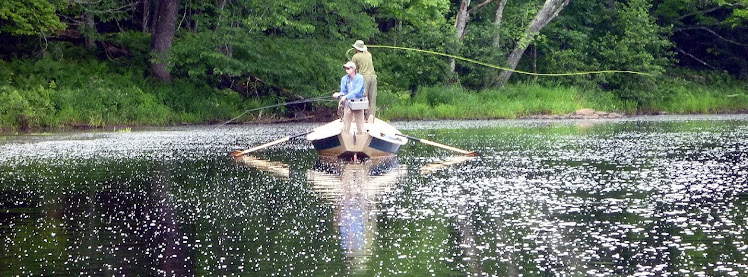
 *On Saturday morning at N. Bear, there were already 3 vehicles parked on the 370th street access. Feeling oh-so-smart, I elected to beat feet far downstream to new water, fish back upstream and miss the crowd. Well, everyone else had the same idea. I guess all of the ‘oh-so-smart’ anglers were on N. Bear that day!
 *During my previous trip to N. Bear I was reminded to check not just the sharpness of the hook but also the hook gap. The hook had straightened somewhat, leading me to believe that is why I was losing so many fish on that fly. On this trip I tried but was unable to check the hook point or gap on a Missy D and then on a Geulk Nymph. After fishing with each for a little while, the portion of each hook went missing below the bend! Check your flies frequently for hook condition, to check if caddis casings, moss, etc., are interfering with the hook, or for any freakishness one might encounter.
 *Why would people leave used condoms in a fishing parking lot? Who wants to pick up that trash on clean-up day? On a side note, a friend of mine used a strip of (unused) condom for a scud back. I don’t quite remember why, but he didn’t recommend a condom for that purpose. Perhaps because he later wished he’d had one that night?


