Thursday, September 22, 2011

FALL MUSKY PREVIEW - The Anglers' Report 2011

   Predictions are in for the ‘Fall Bite’ by those hot on the Musky trail!  While I can’t say I received the well-rounded Midwestern fly angling responses that I’d hoped for, I received great responses from N. Wisco anglers and from a Minnesota guide.  I’ve even included a report from a non-fly angler & wish I had time to hunt down a couple more.  
   Now on to business.  I posted the fly anglers’ responses below from northern to southern regions & by state.  To keep them as timely as possible, I would’ve liked to have posted responses as soon as I’d received them.  However, I felt it wise to post all responses at the same time.  Predictions for a good fall feedbag were generally high, but the early season fishing success was quite variable.  Why?  I dunno; too many variables & not enough responses to even make a good guess.  However, I’ll make a bad guess and say that regional weather took a big slice out of my fish pie.  My warm water fishing this year bit…& it was almost the only thing that did bite.  Even the Smallies frequently snubbed my flies & the closer to home (further south) I fished the less time I spent with a bent-over rod. 
   I hope you take a gander at the responses below & let the anglers get you powered up to hop on the Musky Trail for the big ‘Fall Bite’!  While you’re at it, check out the anglers’ websites to learn a little more about where and how to fish for Musky.  I wish everyone fun & successful fishing.  I know that when the opportunity strikes I’ll be hitting the water every chance I get!  (Posted 9/22/11. Thanks anglers! ~Twitch)

Brad Bohen (www.muskycountryoutfitters.com)
   Brad heads up Musky Country Outfitters in Northern Wisconsin.  He spends May through November getting fishy on the flowages, lakes and rivers of the Hayward Lakes Area.  Brad is a full-time guide, angler, and fly fishing educator who believes that MCO & its guides provide anglers ‘a professionally hosted fly fishing experience second to none’.  Brad & MCO offer  3-day Musky fly fishing classes throughout much of the fishing season.

Bill Sherer (www.wetieit.com)
   Bill and his wife, Dawn, own and operate the We Tie It Fly Shop in Boulder Junction, WI.  Through his ‘Northern Adventures Guide Service’, Bill guides fly anglers across N. Wisconsin, especially for Muskies.  Bill also teaches fly tying and fly fishing classes, and he designs flies for various manufacturers.


Pat Ehlers (www.theflyfishers.com)
      Pat is the owner of The Fly Fishers Inc., Milwaukee, WI.  Pat has taught fly casting and fly tying classes & has been a speaker and instructor at shows & seminars throughout the U.S.  Pat’s other pursuits include the development, for warm water fishing, of a line of fly rods, & a series of fly lines(for Bass and Musky). He is a contract/royalty fly tier & is a writer for various fly fishing media outlets.

   Kip heads up Wildwood Float Trips, based out of Monticello, MN. He is a full-time fly fishing guide. Much of Wildwood’s guided fishing occurs on Minnesota’s Upper Mississippi, St.Croix, Rum, Kettle, and St. Louis Rivers. Kip also holds seminars at most of the major shows and offers tying and casting classes. In October, Kip plans to host a 3-day, 3-river, Minnesota Musky Tour.  


Steve Ruhmann (flatlanderschapter.com)
   Steve is the president of the Flatlanders Chapter of Muskies, Inc.  He has been fishing for Muskies for 14 years & primarily uses baitcasting equipment.  He strictly fishes for Muskies most of the open water season.  Wisconsin areas fished include Lake of the Woods, otherwise he’ll be fishing every weekend at either Madison Chain of Lakes, or waterways in Polk, Vilas or Oneida counties. He landed his personal best 50” Musky this August.


1) WHAT HAS THE MIDWESTERN MUSKY FISHING BEEN LIKE THIS YEAR; A TYPICAL YEAR, BETTER OR SLOWER THAN USUAL, OR ??

[BRAD]  At Musky Country Outfitters we have experienced an exceptional spring and summer as far as musky on the fly has gone in 2011.  We have had to work for the fish at times...but have been consistently bringing both numbers and quality fish to hand.  If this trend continues as expected MCO will shatter its best season ever (2010) with the number of boated musky on a fly.  Typically this musky on the fly season has been challenging and rewarding for both the MCO guide staff and our clients.  I'd rate the 2011 spring/summer as a bit above average.

[BILL]  In the past 15 years I have averaged between 150 and 200 muskies per year, my lightest year was 145, the most I ever boated was 192, so if I continue on the trend I am on now, I should get very close to or exceed my best years...  I had an exceptional year for all species of fish this year, but then I fish a much larger geographic region than most anglers do.  We had the best Walleye bite I have experienced in quite some time this spring, the trophy trout fishing extended even into late June, then we had exceptional Smallmouth Bass fishing all the way through August, I had one of the best Pike years I have had in a long time, and from late spring to present I have experienced some excellent Musky fishing, all of this fishing is on the fly of course.  We had some slow times during high water or cold front times, but these typically only lasted for a couple of days and were not really a factor in my overall fishing success this season.

[PAT]  River muskies have been pretty good to us this summer. I filmed a show, LL Bean's Guide to the Outdoors with Tim Rajeff this past July. We had 3 days to film and were affected by a major front going through, 98 to 78 degrees in an hour and it messed up our smallmouth fishing some. We were able to pick the river apart and get some good film. On the third day I took us to a river with muskies to try and hit a home run on the last day and Tim caught one around 30" for the camera. It really enhanced the shoot. So we've been able to catch a few this year when we have gone out.

[KIP]  I think this summer has been slower than I would have hoped.  I think that it had everything to do with unstable weather patterns throughout the summer and the extremely high water that we had a good portion of the summer.  I don't think the fish could settle into the happy spots and eat like we want them to…I was happy just to dial in some Smallmouth for most of the summer.

[STEVE]  Fishing has been very streaky this year with smaller windows.  One day they are on and then the next day with what would be ideal conditions you can’t even buy a follow. 

2) DO YOU FEEL THIS YEAR'S SPRING AND SUMMER WEATHER WILL HAVE ANY EFFECT ON THE UPCOMING FALL BITE?

[BRAD]  Yes this exceptional spring and summer have set up the autumn to have big, healthy and feisty predator fish.  Great forage producing conditions such as we have been experiencing this season stack the deck in the favor of great autumn conditions as far as fish health and vigor are concerned.

[BILL]  We are definitely drier than last year, especially since early August, which changed the way I approached my Musky fishing late in the Summer and into this early Fall.  ..I think we started into a fall pattern earlier than normal on the rivers I fish, since mid-August the fish have definitely changed their feeding patterns - this is probably due to the change of season and the low water conditions we are experiencing.
   Most of the regional rivers are very low due to the slight rainfall we have had recently, low water means clear water, and the fish are taking very bright flies right now.  In the past month I have been exclusively using a 4/0 Perch colored Figure-8 and catching lots of Muskies.  When I change flies to a Sucker or Smallie color, I can't even get a follow, but when I change back to the Perch, the fish jump all over it!  I believe the fish will stay on this pattern until we get some significant rainfall and the water gets higher and cloudier, then they will immediately switch over to the Sucker colors, they may switch without the rain if we get significantly colder conditions, but usually that coincides with some decent fall rains.

[PAT]  I don't think the weather this year will have any effect on the fishing this fall. I think it will depend on the weather that we get in the next 2 months.

[KIP]  I think the weather will have an effect on the fish this fall; how can it not? 

[STEVE]  The heat of this summer made the fishing very tough.  As things cooled down towards the end of August, the fishing improved.


3) WHAT ARE YOUR PREDICTIONS FOR THIS SEASON'S FALL BITE?!

[BRAD]  It's silly in my mind to predict something like this.  The best advice I can give is to get out there and give it a whirl whenever you can.  An old time musky guide once told me...They are all good...some are just better than others.  (I took it to mean days on the water;)  Fall is always Prime Time...as for this fall...I'll predict it for you in December after I have a better handle on it!

[BILL]  Currently I have 109 Muskies in the boat for this season and I don't see that letting up anytime soon; the "Fall Bite" is already on as far as I'm concerned.  With a little luck and stable weather conditions we may have the best extended fall Musky bite we have seen in recent memory - let's hope so!
   (Excerpt from update on 9/23/11:  Get to the Northwoods asap, this ride won’t last forever, but it will be great for the next few weeks - hopefully through the middle of November!
   Currently we have 126 Muskies in the boat for this season and the best is yet to come, we saw 24 and put 10 in the boat in the past 2 days!  Go out and get em')

[PAT]  I don’t see why we won’t have good fall fishing.  Once that cold weather hits the apex predators start to eat and I think this year will be the same as long as there’s no weather curveballs thrown at us.

[KIP]  Things are finally settling in and this should set up for a very good fall bite.  If the weather and the flows on the bigger rivers that I concentrate on remain for the most part steady things should be good.  Now that the water is low, the fish should begin to concentrate in the deeper water and when that water temp begins to really drop the alarms should go off for them.  Musky are somewhat a creature of habit (when they’re not acting like moody muskies) and once they're happier and more content they should begin the fall feedbag.  Muskies are a lot like kids, they don't like when their surroundings change.  Let's hope the fall is steady as she goes and they get happy. 
  Good luck to all fall musky hunters it should be if nothing else, interesting.

[STEVE]  I think the fall bite is going to rock.   Too many inconsistencies throughout the spring and summer should have these fish rev'ed up this fall...... I hope.   

Thursday, September 8, 2011

THE CALM BEFORE THE BITE ~ The WI-MN Diaries (Part 3, Sept 3-4, 2011)

 IN PURSUIT OF MIDWESTERN MUSKY   
   Prime Musky season is quickly approaching.  The sun is warm but the wind is crisp and delightful.  The green of the trees and weeds are just past their prime.  The grass no longer grows at a lawnmower-burn-out pace.  Fall is nearly here & two nights past, I dreamt of Musky follows. 
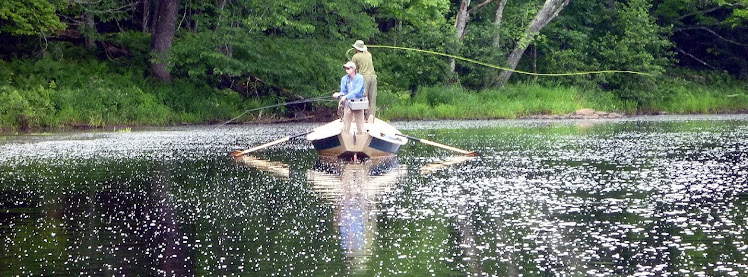
   In honor of Labor Day weekend, a good buddy and I worked-out our casting arms with 10wts on Wisconsin’s Flambeau and Chippewa Rivers.  On Saturday, we’d planned the Flambeau float with a mid-afternoon stoppage for meals and rest.  Then, back to Musky water before dusk, to allow our eyes & other senses to adjust to the waning light, while continuing to fly fish into the night.  However, too little discipline (or too much passion) birthed 12-hours of casting and rowing, accompanied by fatigue and empty bellies.  Soon it was 830pm, darkening, with a waning moon and only one small light to guide our casting, rowing, fly changing… potential fish landing.  Dang!  Our fun and earnest hunt for the apex predator kept us from realistically and smartly exploring these creatures’ night-time habits.  We headed back to camp after loading the pontoon on the trailer.  I truly hope for another post-afternoon opportunity.  24-hrs on the fly/night fishing for Musky is on my bucket list, for good or bad, sane or crazy reasons. 
   Did I mention my buddy landed a Musky?  It was small enough that he didn’t want a photo to commemorate his first WI Musky on the fly.  However, I noted he sat back in the pontoon with a satisfied look about himself and his primary focus then appeared to be setting me up on good Musky water.  Now that’s a mighty fine friend.  He also fished successfully with an 8wt landing Smallies.  I kept to the 10wt and ended up dry, as far as Muskies go.
   Sunday greeted us with rain and a late start.   Throughout the day, the skies would cloud over and it would rain.  Then, after an indeterminate amount of time wearing hood-covered hats, we’d look up from our fishing and note the skies were blue yet again.  Hoods on, hoods off.  We’d also broken out the waders; another sure sign fall was on the way.  All in all, however, it was a lovely day. 
   No Muskies landed on Sunday.  However, at the start of the float, in deep, fast water I had a ~40” Musky follow my fly.  Figure 8 but no take.  Yet, the line was shooting out beautifully, the fly was hitting the targets, & I had a follow.  I was stoked!  The only fish landed Sunday on the Chippewa was a Smallie on a Musky fly.  We tried a variety of flies, but the Musky, the Musky follow, and the little Smallie with a Musky appetite all came on the ‘Supercharger’.  This fly is a Jared Ehlers creation; a quick tie which presents with a large profile and excellent action in the water along with a nice ease of casting.  http://www.youtube.com/watch?v=JN8G64gHU4c .  The photo shown is a Supercharger but with an added orange marabou collar.
   The weather patterns varied throughout the weekend so how did that really affect the fishing?  After our final day of Musky hunting, we stopped in at Wannigan’s in the town of Winter for broasted chicken.  Greg, the owner whose business is next to a popular take-out spot on the Chip, told us that the fishing seemed to have been slow this year, attributing it to the hot summer temps.  So I’ve been wondering, what has Midwestern Musky fishing really been like this year; a typical year, slower than usual, or ???  And, will this year's spring and summer weather have any effect on the upcoming Fall Bite?
   I’ve decided to take these questions to the folks who have been fishing for Musky as much as I wish I could.  I’ve e-mailed Midwestern Musky guides, and also fly shop owners who cater to those who crave the pursuit of toothy critters.  Of course, the hope is for a good response.  (UPDATE:  The Fall Preview post, including the anglers' responses, is posted on my general posting (or Home) page. It will remain there until the end of November.  After that time, I will move it to the 'Featured Article' page. -Thanks, Twitch. 9/22/11)

   As for my predictions:  I believe the Musky Bite was slow this season & that their prey did not flourish due to the same suboptimal weather conditions.  If so, the Musky were able to feed adequately, but their typical body mass for this time of year is on the low side of normal.  With that in mind, Esox will have enough stored energy to aggressively pursue their forage base and will do so.  They will instinctively understanding the need to play catch-up in order to have the stored energy reserves available to survive the winter and be ready to spawn in spring.  To get to the point, I predict the Musky will behave like dogs left alone in meat markets and the fly angler will simply need to locate those markets.

Sunday, August 21, 2011

IA DNR & AWARE Volunteers Clean Up Waterways (...Trash Talk continued)

*JULY 7-14 were the dates for the 2012 AWARE clean-up of the Iowa River. Please see the 2012 post for results:  http://strip-n-twitch.blogspot.com/2012/07/this-year-participants-in-iowa-dnrs_19.html *

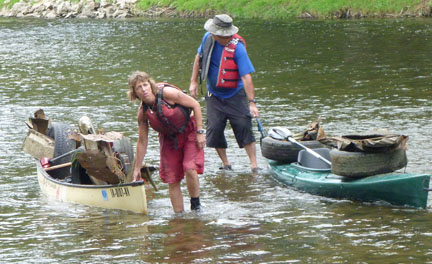
    On July 9-16, 2011, the Iowa DNR again backed up its trash talk with action.  The DNR’s Project AWARE volunteer river clean-up of the Little Turkey, Turkey, and Volga Rivers netted 64,722lbs of garbage.  That is the equivalent of 32.36 tons, or nearly the weight of 18.5 new 4WD Honda CR-V LX SUV’s, being removed by volunteers and their canoes! 
   This year, 429 volunteers participated in the clean-up.  An average of 152 volunteers participated each day with 273 being new to AWARE this year and 61 having participated for 5 or more years.  Of the total amount of trash collected by these volunteers, 96% was recycled.  Scrap metal, then tires (611), composed the greatest weight of recyclables, and 335lbs of redeemable cans/bottles (cha-ching!) were found.   
   Participants ranged from aged 2 to 76.  An Indiana father/daughter team participated and a father from Cedar Rapids, IA., had sons from Illinois, Colorado, and Oregon join him on the hunt for garbage.
    When asked what the most unusual piece of trash removed from a river was, Brian Soenen, Project AWARE Coordinator replied, “While I don’t recall anything being incredibly unique, volunteers found quite a few wooden-spoked wagon wheels and an insane number of large implement tires.  The great news is that most of the trash was ‘old’ junk…been there a long time and has now been forever removed.”
Photo Caption Information:
   #1:  On day 1, Nick Gaeta, Cedar Rapids, IA, transports trash through Gouldsburg Park on the Little Turkey River, following a 'pre-cleanup' of nearby Crane Creek. Gaeta has participated in all but the 1st year of the Project AWARE clean-ups.  #2:  While at least 5 paddlers had already spent a good portion of this day plucking trash on a 'pre-cleanup' of Crane Creek, most volunteers set up camp at Gouldsburg Park, Hawkeye, IA, & enjoy the day's outdoor festivities. The confluence of Crane Creek and the Little Turkey River is located at the park.  #3:  KJ Rebarcak, Long Grove, IA, left, and 'Dutch Oven' Dave Brown, Springfield, MO, transport trash through the Little Turkey River on the first day of this year’s Project AWARE river clean-up.  The trash was actually removed from nearby Crane Creek.   
 #4:  Members of the Dubuque Fly Fishers and the Hawkeye Fly Fishing Association were asked to volunteer their time and present a hands-on fly casting clinic.  Approximately 8 fly anglers participated.  Project AWARE volunteer Rose Danaher, Homestead, IA, (pictured) receives a fly casting lesson from Kate Lodge, a member of both clubs, & a Geneseo, IL, resident. 
   For more information about Project AWARE (A Watershed Awareness River Expedition), & methods of participating in the clean-up of Iowa waterways, please visit this link:   http://www.iowadnr.gov/Recreation/CanoeingKayaking/ProjectAWARE.aspx .   And, please e-mail me your 'trash talk'!  If you pick up trash from waterways or want to share how you have changed your own habits of trash disposal while on waterways, if you want to comment about how waterways have improved over the years, or if you want to report about what you most commonly find in and along waterways, email me about it or send me a picture.  I'd like to increase the attention paid to the maintenance and appreciation of our waterways.  ~Twitch

Tuesday, July 5, 2011

Trash Talk About Garbage on Waterways (...continued from April post)

   Project A.W.A.R.E. will host its 9th annual volunteer river clean-up from July 9-16, 2011.  Volunteers will spend a day or up to the week helping to clean trash from 88.1 miles of the Little Turkey, Turkey, and Volga Rivers.  A.W.A.R.E. refers to ‘A Watershed Awareness River Expedition’ and is an Iowa DNR program.   
   Volunteers travel the rivers by canoes, tent-camp, pay for the provided meals, and may partake in nature and environmental programs in the PM.  Examples of this year’s programs include:  a canoe skills and safety class (IA DNR), an owl walk (Fayette County Conservation Board) and a hands-on fly casting demonstration (Hawkeye Fly Fishing Association & Dubuque Fly Fishers). 
   Please click on the link to the website if you would like to learn more about the program or to become a sponsor or volunteer.   http://www.iowadnr.gov/Recreation/CanoeingKayaking/ProjectAWARE.aspx
  Following the week-long river clean-up, I will attempt to provide readers with general information about the volunteers, & the pounds of trash removed from the rivers, along with some of the oddities discovered in the waterways.
   (And as I wrote in my first 'Trash Talk' post in April, 2011, if you happen to pick up trash from any waterway, anywhere, e-mail me a few lines and/or send me a picture so I may post it and encourage further waterway responsibility.)  Thanks, ~Twitch

Fishdecorah Website: A Great Catch

   This evening, my mouse took me on a field trip to the fishdecorah website:  http://www.fishdecorah.com/.   I was impressed.  No cutesy stuff (note ‘mouse’ and ‘field trip’ above), no protracted stories about one’s own fishing trips (really, I attempt brevity!), ….and it is not a fly fishing-specific site.  It is a site dedicated to the NE Iowa Driftless region, specifically Winneshiek County & surrounding areas, for those who enjoy any type of fishing and who care about the region’s environmental concerns, it’s geology, and how we can protect what we love.  In addition, it’s easily navigable and friendly, but without the excess fluff which can get in the way of tearing in to the meat of a topic.  I invite you to click on the link above and learn more about the Iowa waterways unique to NE Iowa (and where else in the Midwest can one fish for trout year-round?).

Wednesday, June 29, 2011

Preparing for a Boundary Waters Vacation (or any camp/canoe trip)

   I highly recommend packing weeks early for a big trip so you can be wound-up, stressed and tired around your co-workers, family & friends.  This way you avoid: (1) heading off in your vehicle on day 1 of ‘the big trip’, attempting to stay awake after 3 hours of sleep and a previously crazed night of last-minute packing, while wondering if all the pit stops have been worth the ‘caffeine buzz’, and (2) muttering to yourself and yelling at your fly rod during the first half of ‘vacation’ while your (currently annoying)vacation buddy continuously suggests you relax.   
   Prior to my latest fly fishing trip, I did just that: (drum roll) I packed early.  My vacation pal –who, truthfully, never is annoying- did tell me to relax a couple of times, or something to that affect.  Frankly, I think he was just saying it out of habit.  I was so chilled out, that while we canoed we could’ve set the beer on my lap and I would’ve kept it comfortably cold.  I was so relaxed, I should’ve worn a diaper. Oh, wait, too much information (Now my buddy will know why the beer never really stayed cold).   But you get me drift.  I…was…relaxed. 
   I hate to clean.  I am not domestic.  And something feels very unnatural about doing typical, cleanly domesticated things while on vacation.  Some ignorantly call this ‘laziness’, but the enlightened (like me) know better.  Jeez, it’s vacation(!) and all mundane thoughts of typical daily labor should be left at home.   That is why I despised the 5 minutes it took to wash the dirty camp dishes.  Plus, there was firewood to find and to cut, water to collect and to treat, a fire to successfully light, meals(campfire meals are not typical chores) to cook, & a bear bag to hang.  Of course, all this took place during the last 1.5hrs of daylight, while the mosquitoes were sucking out the last ounces of fluid from our already dehydrated bodies, after a day of paddling and fly fishing in the sun and wind, which was after a late-night of drinking the not-so-cold beer.  
   Maybe that is why my buddy asked ‘if there was something wrong?’ at times... perhaps while also wondering if I should relax a bit more….  But, fellow fly angler, you understand, don’t you?   You understand while, after a hard day of play, all sweaty and stinking, after hauling & cutting wood, hauling water, throwing rope-wrapped rocks over tree limbs and hauling up bear bags, then hauling off and smacking the insects bleeding our bodies dry, on vacation,  why it irritated me to hunker down & spend 5 minutes scrubbing dirty dishes?  Something wrong?  I was simply in the zone.  I was working hard to steal back those precious 5 minutes of relax-time I’d lost to the dishes at the end of each vacation day.
   Heck, that isn’t true.  Well... it’s partially true.  Under very specific circumstances, I admit to being lazy.  Some may say I’ve been a bachelor(ette) too long.  I’ve come to realize that if I frequently get carry-out, not only do I avoid cooking, I avoid dirty dishes piling up in the sink.  I’ve also wisely expostulated that if I knew I were going to die tomorrow, I’d regret not taking a fly fishing trip, but would not regret leaving behind a sink of dirty dishes(sorry mom—I recommend you just throw them out).
   So, what’s the moral to the story?  I don’t know.  What I do know is that if my vacation buddy is still willing to vacation with me, I’d go back to the Boundary Waters again in a heart-beat, relaxed or not, hard work to be had or not. 
   Do you know what the irony is?  Once I got home I unloaded my truck & immediately transported the mess to my living room & kitchen floors.  Then, a couple days went by.  The vacation mess remained, but I’d washed all my dirty dishes.

Tuesday, June 7, 2011

The Nam: Friends, Fishing, Fun, and Ticks ~ The WI-MN Diaries - (Part 2, 5/2011)

    We debated:  fish smallies on Chequamegon Bay & camp on the boat, or float/camp the Nam for trout?  No bad choices here, but ultimately the weather decided.   Too much wind for the bay.  Namekagon-bound!
After a night of suv-camping, I hurried off to Hayward.    Aah, a sense of the ‘warm fuzzies’ came over me as I fell in behind the canoe strapped to the familiar old Yota.  That Yota took me on my first fly fishing adventure in 2008. 
   We pulled in at the gas station, OC and I said our hellos & we eventually headed out.  Eagle’s Landing first, then we unloaded the canoe and all of our supplies at Thompson Bridge.  This trip was sort-of a mini dry-run for our upcoming BWCA canoe/fishing trip, minus 2 days.  Surprisingly, we were cramming a lot of stuff into the canoe, but when portaging the Boundary Waters in June we’d need to scale back or be miserable.   I wondered, ‘How would that affect the beer situation?’
   Anyway, we hit the water around 11AM on Friday the 13th.  Temps were in the low 50’s and there was an intermittent stiff wind to accompany the light gray day.  The few occasions the sun appeared, it was blessedly warm & wickedly short-lived.  We shared the paddles, with OC providing tips on how to improve my canoe skills.
   Of course the day was to be filled with fly fishing but there was a target in mind.  Big nymphs with droppers, & big buggers were the main entrees.  We were targeting Big Brown Trout.  Early on, I landed a 13” Brown.  I like to think it fought ‘big’.
   During our own lunch break we banked the canoe near a bridge with a small rock dam.  I ate and looked for mushrooms.  OC started wading and fishing, then disappeared.   I heard him yell.  He had a good-sized fish on.  At that point, I had other fish to fry.  I knew my buddy had intended that I solo paddle the gear-laden canoe across the current, avoiding the little dam & rocky rapids, swing under the far side of the bridge, then head downriver.  I was feeling that the only ‘buggers’ weren’t in the fly boxes!  I was alone with no mistakes to be made.
   I ignored my friend’s yells and pondered.  I got in the water, grabbed the rear of the canoe and began wading upriver, relieved that the soft riverbed was firm enough to hold me.  About 35 yards upriver, I was in better position to safely paddle to the opposite side of the bridge.  I remained tense, however, as I paddled under the bridge, seeing and hearing the rough patches of water on my left side. 
   Perhaps my buddy was, so to speak, starting to ‘push the baby bird out of its nest’.  However, this chick was a bit miffed.   After all, the nest was holding all of our camping/fishing gear.  I let him know I was irritated but told him I didn’t know how much, as that was directly proportional to how tricky paddling the canoe directly across the current would’ve been &  I didn’t have a clue.
   At least irked to not care(very much) when he said the 22”er he’d had on broke off at the knot I’d tied, I simply asked him why those knots only seem to break when he had fish on my rod?  However, soon after, it bothered me.  I felt I’d tied a good knot & I’d checked it.  The only black and orange Guinea Bugger I’d tied was gone with the fish, too.  I’d had a good feeling about that fly.  Later, OC lost 2 more fish and one was at his knot.  The leader was replaced. 
   We landed a few fish & lost a few that day.  Come evening, I’d tied on a chartreuse/olive marabou concoction which, when I’d tied it, was told it was a good Steelhead fly.  The fishing was down, might as well experiment.  OC and I alternated rods, typically having one nymph rig set-up and one tied with a streamer pattern.  OC hooked into a fish with the marabou concoction.  He landed the bronze 11”er; his first Brookie on the Nam!
   We politely slid the canoe around holes where other anglers were wading.  At one hole, the man’s unsmiling face alone confirmed that the fishing was down.  Then I saw a flash downriver of our canoe with the man soon setting the hook upriver of our canoe.  We slipped away and cheered him on!  It was his first fish of the day.    

   We’d intended to set up camp at 4PM and arrived on time somewhere after 630.  OC had hoped for the rare occasion to cook up some trout (he’d read a book about an 1800’s Brule River guide frying the catch in bacon grease) and I’d hoped to treat my friend to his first-ever morels.  The fish weren’t legal and the discovered 'brain mushrooms' could’ve been lethal.  So, hopes put on hold, we had more time at camp to light a smoky campfire and free winged insects from an over-winter in a lidded, open-air vault toilet.  Due to tick concerns, we kept our waders on as long as possible.  I’d also worn my fleece wading pants, socks over the stirrups, for the whole trip except when I carefully dropped them for, you know….  At least the view from ‘the vault’ was pretty in that gold n green pine tree hue sort of way(yes, there is a point to this latter part of the story!).

   Later, I cooked up a BWCA menu test recipe:  chicken with cranberry stuffing.  It would do.  OC fried bacon and we ate our fill while dodging the smoke from the camp fire(it was still windy).   I hit the tent first.  He soon followed &, having forgotten cards, we played the kid’s game, ‘Connect the Dots’.  OC played it like he fishes; better than me.  However, on a fluke, I won.  That just emphasizes the moral to my story of life:  Never give up.  I guess that is why I am typically the last off the water. 

   We woke early the next AM to wind, cold and rain, & more deer ticks on the mosquito netting.  Luckily, no ticks were in the tent.  I got coffee brewing under the tent vestibule.  With coffee to warm us, I went off to ‘enjoy’ the view under the pines and OC got breakfast started.  He ate most of the half crispy/half limp bacon slices.  I pulled off a few stray crispy pieces.  Then, he threw the eggs in the bacon pan.  Wow!  Note to self:  I fry the bacon on the BWCA trip but I beg OC to scramble the eggs.  They were the best I’ve ever eaten.

   Mid-morning we packed up camp and climbed in the canoe.  15mph winds easily.  Brrrrr!  And why is it so hard to find clear, polarized glasses?  They would’ve been ideal for this gray day.  I landed an 11” Brown and OC landed more, of course.  He also landed a 23” Redhorse.  Later, I switched to a smaller, size 10, bugger and got more hits.  Due to the weather, I happily thought we’d have more of the river to ourselves.  But it was also a Saturday and I was wrong.  I found myself equally happy to share the water with anglers who also thought casting with 20 mph gusts in chilly temps was still a pleasurable way to spend a day.     

   Soon, it was after 7PM and it was getting a bit late to set up another camp without rushing ( mmmm… pizza and beer).   So, we split the reasonable rate at The Riverside in Hayward.  While OC went to the grocery store to prepare for his next day’s guide trip and to also pick up our pizza, I took advantage of some privacy and a warm shower. 

   Dangit!  Small & wiggly sore spot on butt!!  Attached.  So much for a relaxing shower.  My buddy returned with a hot pizza and I exited the bathroom strategically draped and embarrassed.  Yep, it was a deer tick.  While my embarrassment lessened but never entirely went way, what I believe he considered to be a minor inconvenience turned into his intriguing dissection.  Two breaks, one his own tick-check(1 wood tick, unattached) and the other, a luke-warm pizza break; tweezers, a safety pin,  and, finally, ice to numb the area so he could dig out the last stubborn remains, and the tick was gone.   

   What a long day!  The next morning, OC headed out early to meet his client.  I grabbed breakfast and changed my mind repeatedly on where to fish.  I always say that heaven is just north of IL & it’s Wisconsin.  But, in the evening when one is on a 7 hour drive home, deer run onto the road and one gains insight and, last year, large dents.  Deer would not run onto the road willy-nilly in heaven.  They would politely wait their turn to cross the road.  My point?  Wisconsin is not heaven, just similar.  Therefore, I wanted to fish somewhere quickly so I could get back to IL prior to nightfall to lessen the chance of WI deer attacks on my CRV. 

  So, I headed south on Rt. 63 toward home.  The Nam isn’t known for trout in this section, but remember my motto?  Never give up!  I went to Groat Landing, hiked a trail, found a hole and fished.  Waded more, saw a guy and gal dump their canoe in the river, watched a hatch and knew I would not catch any trout at this place.  With the hatch on my mind, I decided to return to my suv and drive back through Hayward to prime trout waters.  New motto: Never give up, but be smart about it.  Let’s just say I had a couple of hits, & it was sunny but still very windy.  No delicate presentations today.  Also, while I’d gone to prime trout water, I didn’t find a prime trout hole.  Time and travelling by wading boot limited my options.  So, as usual, I left the water late, around 3PM, driving a portion of the trip in the dark, but I was out of Wisconsin by then.

   Today, I’m on day 13/14 of antibiotics.  Lyme disease prevention.  I did not want to take the chance of acquiring Lyme and missing our BWCA(Boundary Waters) trip in June.  I hear the open-air vault toilets are erected in even prettier settings there, so, no reading material needed. However, I won't forget the TP and DEET.     


Sunday, May 1, 2011

The Fly Tying Trials of Skunk vs. Polar Pony Hair

  The quest for skunk tail started when I discovered, on-line, a Clouser-like musky fly made with 'Polar Pony'.  My fly material sources didn't know what it was, but Google did.  It comes from a pony which lives in Iceland.  Evidently, Icelandic pony hair is a very special thing since a package of it, with dimensions similar to flashabou, runs about $14.  Now, if that Clouser-like musky fly could guarantee me one 50"+ musky this season, I'd buy it.  However, I never saw that claim on a package.  http://hatchesmagazine.com/blogs/Hatches/2011/02/07/steve-silverio-ties-the-silverfishfly/
   So....that is what led to my desire for skunk tail.  Frankly, I no longer remember how or if skunk tail is similar to Icelandic pony hair.  However, we all know that once one starts looking at a particular fly pattern, then looks for substitute material for said pattern, other discoveries are made.  Then, the initial search is temporarily forgotten due to the curiosity elicited by discovering the potential for yet a different fly tying material.  This is why a particular fly tier can gather a lifetime of tying material in a couple of years. 
   However, I do believe there is a correlation between an Icelandic pony and, well, a skunk. I want to tell you that the reason for the high cost of the Icelandic pony's hair is that the pony also values his hair and has developed a defense mechanism to prevent would-be fly tiers of Icelandic pony hair from creeping up and cutting off its mane or tail.  I want to tell you the pony lifts its tail and tries to spray those wanting to steal away it's long, shiny hair. Therefore, one can understand why the hair is so expensive; it’s hard to get & hard to get rid of the smell if sprayed.
   However, if I told you all that I would be lying.  The truth, if I remember correctly, is that skunk hair is said to be long, shiny and almost translucent. Somewhere in my memory banks, skunk hair sounded like a nice substitute for Polar Pony.
   'John', a hunter and fisher, goes to K&K Hardware every Tuesday to visit a friend who works at the store.  I occasionally stop by to visit with 'the boys' & to shop for fly tying material.  John is also becoming the man who provides me with 'excellent tail'.  I was given my first tail shortly after deer hunting season.  It was prime bucktail.  The bone had been removed and the tail had been dried.  I later thanked John with home-made cookies. 
   So, when I first started thinking of skunk tail, I thought of John.  If 'the boys' were out hunting and happened to run across a dead skunk on the side of the road --in good shape, perhaps just a head injury-- maybe John would be willing to harvest the tail for me.  Unrealistic to find one in good shape?  Perhaps, but I tend to be optimistic. 
   It just so happened that when I asked John about skunk tail, his neighbor had trapped one that day.  I can't say I like it, but these boys are hunters and John says skunks eat the eggs of the birds they hunt; he said the skunk wasn't going to be around much longer.  I emphasized I didn't want a skunk killed for me, but if it was going to happen, why should the tail be wasted? 
   A couple weeks later, I came into the store and John just as quickly left.  Soon, he came back with a smile and a sealed bag containing the skunk tail.  We could smell the tail through the bag.  John noted that his cats, Connie Chung and #5, wanted that skunk tail more than catnip.
   So, I took the tail home, did a little research, and soon the tail was double-bagged and sitting in borax.  I only needed a nice day to be able to mix up a ‘cocktail’ which has been known to neutralize the odor created by skunks.  Now, I live in a little slab home with an attached tiny garage in a tiny yard, surrounded by neighbors who don’t like the smell of skunk.  It’s also been raining a lot.  Due to the smell, the rain, and the fear of a cat carrying my tail away, it’s been sitting for a month or more in the bag in the garage. 
   But today, it did not rain.  I took the tail outside, mixed up the ingredients (1 pt 5% hydrogen peroxide, 1/4 cup baking soda, 1 tablespoon liquid dish detergentuse when freshly made) then placed the tail in a bowl with the ingredients.  The mixture frothed up like the head of steamed milk on a cappuccino.  It pushed half the tail out of the bowl.  I waited at least 5 minutes, pushing the tail back into the liquid.  I noted the greatest odor was coming from the bag which now only contained borax.  I sniffed the tail before and after rinsing it off and estimated at least 75% of the odor was gone.  After letting the tail sit outside for a while, I sealed it in another bag filled with fresh borax.  I would buy the recommended fresh hydrogen peroxide soon and give the tail another bath. 
   Then, I left for the fly fishing club meeting.  Upon returning home, I noticed a slight odor in the garage…  I'd been wrong.  I now estimate the tail odor has actually been reduced by 50%.  I can’t say the tail is fly tying material yet, but it’s getting there. 
   (By the way, when the tail is ready and a fly is tied, I’ll post a picture.  Perhaps it will be a Clouser-like fly tied with a great substitute for Polar Pony.  And, while researching how to deodorize and dry a skunk tail, I came across a very funny article about ‘The Skunk Hair Club’. This is the link: http://www.bassresource.com/fishing/Skunk.html) 
~Twitch

Sunday, April 10, 2011

Trash Talk About Garbage on Waterways

   What is a simple way we can all 'Cast It Forward' when we head out to fly fish??  Bring a bag along and pick up the trash you see at the waterway or in the parking lot.  Forget to bring a bag?  So what?  Simply picking up one or two pieces of trash on the trip back to the car will help to keep our woods and waterways a better place for all to visit.  If all anglers picked up 1-2 pieces of trash every time he/she went out fishing, it would make a big impact on our environment.  Of course, don't litter, and try to keep those clipped tag ends of leader material -esp fluorocarbon- off the water and in the garbage.  
   I plan to post pictures of garbage taken away from our waterways...or pics of cleaner waterways!  Send me your pictures(even if it's 1-2 pieces of trash!)...or even an email telling me what garbage you've picked up, your first name(optional) the name of the waterway, and its location.  If you have dates of stream clean-ups, etc., I'd like to know that, too.  I will post this 'trashy information' on my 'Casting It Forward' page in its own section.  Format unknown as it depends on the type of response I receive.  I don't care if you are from Slovenia or Iowa; in reality it's everyones' 'backyard' and it's the home to all finned/feathered/furred creatures.  Thanks, ~Twitch  stripntwitch@yahoo.com

  (A fellow reader felt someone reading this post may have interest in a link she provided me, so here it is:  http://www.connectutilities.org/blog/2011/10-things-most-garbage-services-wont-take/ )

Monday, March 14, 2011

Tight Lines and Smallmouth Bass

   The ‘hole’ was actually a span of riffles located next to a seam of slow-moving pocket water abutting the bank.  Following a couple of roll casts, I casted traditionally, aiming near the edge of the pocket.  With more line out, my soft hackle nymph drifted out along the slow water & began to swing across & into the riffles.  Just as I began to strip line in, FISH ON!  The temps were cold enough to freeze water on the rod guides, it was windy, & my soul was lifted.  The fish fought well, leaping from the cloudy water.  It was a 14” Rainbow; a feisty stocker.  It was landed on Swiss Valley stream on my last hole of the day.  Jackfish Kate and I had started out fishing together, but our paths split when Jackfish headed downstream, fishing and exploring.  Soon after, I'd discovered a nice view of the stream when trekking along an uphill trail.  Jackfish was framed beautifully while fishing in mixed ribbons of golden brown earth & milky brown water.  We met back on the trail, readying for home.  That was how we ended the day of March 12, 2011 in the NE Iowa Driftless region:  fly fishing.
   We started our day walking into the Swiss Valley Nature Center, Peosta, IA., just as the programs hosted by the Dubuque Fly Fishers and presented by Tight Lines Fly Shop owner Tim Landwehr and shop guide Nate Sipple were set to begin.  Forty to fifty guests had come to listen to the men from the De Pere, WI, fly shop give their presentations.  Topics included:  how and where to fish for river Smallmouth Bass; demonstrations on how to tie smallie flies; and why the Midwest, and especially Wisconsin, is a fantastic & underappreciated freshwater fishery for fly anglers.
   Of course Tim gave an overview of the offerings of his fly shop, including guide services with the 7 guides on staff, free winter programs of guest fly tiers, a large selection of flies for sale & the shop’s websites.  He then delved into the meat of the first topic, which was how to successfully fish for river Smallmouth Bass.  While standing in the heart of Iowa trout country, Tim reminded the anglers that trout live and interact differently in their habitat than smallies do in their habitat; therefore each species should be approached differently.  For example:  prey in the trout environment often move slowly whereas forage for smallies often move quickly & are generally chased; trout typically face into the current, but smallies face many directions; and trout hold close to, or in direct current, but river smallies prefer to hold in little or no current.  
   Then, with photos displaying on the video screen of river structure, interspersed with photos of happy clients with rotund 19”+ smallies, Tim provided examples of how to fish the given structure, the forage type & how it presents itself, and followed with how & when to fish top water, intermediate and sinking flies.  Tim stated that 85-90% of a smallie’s diet is crayfish yet 2 of the most successful shop patterns used are the Bart-O and Mudich Minnows.  Tim said, “Opportunity trumps quantity always”.  More energy and risk are involved with eating a crayfish than a baitfish.  Due to the aggressive nature of smallies, Tim also reminded the anglers not to cast in the same spot twice.
   Nate presented the 2nd portion of the program.  He demonstrated how to tie the Murdich Minnow & another un-named baitfish imitation he’d created.  Additional tips, such as how & why to use an adhesive gel vs. the liquid version when attaching eyes, and why one should gently lift a fly tied with ‘Fish Lips’ to the water’s surface prior to casting again, were provided.  The shop’s top 6 fly recommendations were given, and Tim gave a demo on how to tie a Fordyce Loop when attaching a fly, especially a popper or streamer pattern, such as a Clouser, to the leader.
   Tim finished the programs emphasizing how the Midwest & particularly Wisconsin is a great freshwater fishery for fly anglers.  He spoke of stream improvements in NE IA and SW WI, the amount of free public access granted in these states & the diversity of fishing opportunities afforded those lucky enough to regularly fish the region.   Tim claims the Midwest has the best Smallmouth Bass fishing available.  He also spoke of trout streams, the Hexagenia Limbata hatches, the Musky Capital of the World, migratory fish including big Brown Trout and Steelhead, & of the hard-fighting carp.
   Tim also displayed a graph comparing the length of the fishing seasons in Montana versus the Midwest.  Shortly afterward, Jackfish and I donned our waders.  The program was over but we had more Iowa winter fly fishing to do!

Friday, February 25, 2011

Fly on the Tie

  Life provides us with the sun and the clouds and sometimes we cause the sun or the clouds to come in to our lives. As fly anglers, occasionally we may wonder if we can ever bring back that pure happiness of fly fishing with special friends. Oh Amazing Sunshine...even on cloudy days! 
  Tonight, someone else's sunshine parted the clouds I'd created for myself.
  I attend a 'music night' in the basement of 'Dot's Pots', the pottery shop of friends Dot and Dan.  A few who attend have dabbled in fly fishing but none currently fish.  But, whenever I go, people always ask about fly fishing & if I've been out lately.  Jerry, a man who collects old ashtrays and who generally has tales of a well-lived life to share, recently began to attend.  While he is a pleasure to be around, we still barely know one another.  I know he's an intelligent man who sports unusual neckties and he knows I fly fish.

  The afternooon before the most recent music night was to start, friend Dan called & left me a message.  He was excited.  He said Jerry had been by and had dropped off a few presents for me.  For me?!  Sadly, I couldn't attend music night.  However, I stopped by the shop to visit Dot and Dan tonight.  Dorothy waited for Dan to get home.  Together they watched me as Dot pulled out Jerry's gifts, one-by-one, from a plastic bag.  The first was a pamphlet from 1941 with the cover depicting a miffed man  holding his small catch next to a teen holding her large catch of fish. The next item was a mug showing a flyangler hooking a rainbow. All lovely gifts.  However, Dot was right when she held out the 3rd item in her closed palm & said, "You're going to love this!"
  I knew it was a bolo tie but I couldn't see the clip until she opened her hand.  And there it was. 
A metal-framed white pendant with an actual fly for trout/steelhead encased in a clear topcoat.  Oh, we were all smiling!!
  Jerry may never truly know how much his gifts and how much more his utter kindness and selflessness brightened my heart.  Today, he was my rainbow.  As we are not perfect, we are given the wonderful opportunity to grow.  We can't undo our past but we can use the past to improve who we are and how we interact with others.
  Jerry's thoughtful actions, which may have seemed small to him, had very positive effects on me at a time I needed them the most.  I will make sure Jerry knows this.
  And Jerry reminded me to continue to try and do good & be good for others.  Sometimes the smallest actions have the greatest effects.  Many times we are not aware how strongly our actions can make another's day...or not. Life with others can be sort of like fly fishing for trout. You have to be able to read the water, not spook the fish, be aware of your surroundings, provide a delicate presentation, & respect and handle the fish carefully.  It can be tricky.
  Sometimes, though we try to do it all just right, we miss something. The clouds come and the rains fall.  We lose or hurt the fish despite the lack of intention to do so.  While fish don't readily provide do-overs, I still choose to grow from my mistakes and be the best fly angler (and friend) that I can be.  If I ever hook the same fish again, I will have the no-how to treat it better. However, I also know there will be other fish to catch and I can positively say that 'the best I can do' is a little better now.
  As we are not perfect and will make mistakes, I believe it becomes even more important to treat others kindly; to ensure that the positive actions one performs in life outweigh the negative ones.  Jerry's gifts are a great example of this.  Small gifts from a near-stranger had a powerful effect on me.  What we do or don't do in the life of family, friends and strangers can have a powerful effect. And, as we are reminded of our own mistakes it becomes easier to forgive others.  Happily (& sadly), I've become a very forgiving person.
  From the gal who ties flies: Thanks, Jerry, for the fly on the tie!

Monday, February 7, 2011

Guinea Bugger and Guinea Bugger Deluxe

      The olive Guinea Bugger was the 1st original fly I tied, the first fly with which I landed a fish(an 18” smallie), & it was the 1st day I fished it.  It was also the first fish of the day.  To top it off, it was my birthday.  On a solo fishing day, I landed my first largemouth bass on the first cast, using a red Guinea Bugger.
   The Guinea Bugger Deluxe came about when the orange guinea feathers I ordered were too short to wrap too far on the hook shank.  The 2nd portion of marabou took up extra space and gave additional bulk to the fly.  In the water, it produced a pulsing up and down motion to the fly’s body.  Frankly, on a float trip I was a little embarrassed to fish the bright orange fly, so I initially didn’t.   After a different fly did not produce, I popped on the orange GBD.  That little fly landed the most smallies of the day. 
   There were much better fly anglers than me on these  trips.  I believe that is why the olive and orange GB and GBD’s have become my confidence flies.   
   If you are interested in tying these flies, please read below for further tips.  Also, visit the Fly Tying page for the recipe(s).  I keep the body color lighter or the same color as the marabou.  I typically use chenille for the body.  However, you may also use other material, such as estaz or frosted yarn, to add more flash and to de-bulk the body, allowing another wrap or two of guinea on the body.  Look for pkg’s of guinea with spotted portions of feathers 1.5” or more in length(pretty-plumes on eBay is starting to pkg these longer feathers). The GBD works well when feathers are shorter.   I tie in the base of the guinea near the eye of the hook & wrap rearward.  In this manner, I’m ensured the front of the fly always looks good.  You may also tie in the tip of the feather midway up the hook shank & wrap forward.  This latter method of tie-in produces other considerations and I’ll provide more info if desired.  I always tie in a solid black flash at the tail.  This balances the black in the guinea and may look like a ‘lateral line’.  In the GBD, I will also add Krystal flash to the 2nd clump of marabou.  The fly tends to look better if the thread closely matches the color of the body.   It is important to firmly bind down the guinea stem, so I use 3/0 up to 210 denier thread.
   I’ve also tied chartreuse, white,  black with blue, grey Guinea Buggers, and more.   Some won’t be fished at all.  Others, like the grey, will be fished as soon as I can.  I’ve had ‘fish on’ in trout streams with the GB, but nothing landed to date.  I still struggle to land trout.  I believe the GB and GBD will be successful with more than bass & hope to find out this year.   But hey, bass are fun!